Readings Newsletter
Become a Readings Member to make your shopping experience even easier.
Sign in or sign up for free!
You’re not far away from qualifying for FREE standard shipping within Australia
You’ve qualified for FREE standard shipping within Australia
The cart is loading…


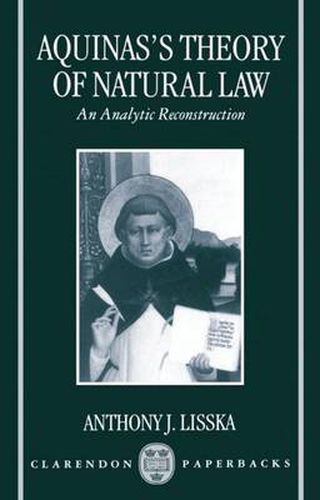
This new critique of Aquinas’s theory of natural law presents an incisive, new analysis of the central themes and relevant texts in the Summa Theologiae which became the classical canon for natural law. Professor Lisska discusses Aquinas’s view of ethical naturalism within the context of the contemporary revival and recovery of Aristotelian ethics, arguing that Aquinas is fundamentally Aristotelian in the foundations of his moral theory. The book looks at the historical development of natural law themes in the twentieth century, and in particular demonstrates the important connections between Aquinas and contemporary legal philosophers. The book should be of considerable interest to scholars of jurisprudence as well as philosophers.
$9.00 standard shipping within Australia
FREE standard shipping within Australia for orders over $100.00
Express & International shipping calculated at checkout
Stock availability can be subject to change without notice. We recommend calling the shop or contacting our online team to check availability of low stock items. Please see our Shopping Online page for more details.
This new critique of Aquinas’s theory of natural law presents an incisive, new analysis of the central themes and relevant texts in the Summa Theologiae which became the classical canon for natural law. Professor Lisska discusses Aquinas’s view of ethical naturalism within the context of the contemporary revival and recovery of Aristotelian ethics, arguing that Aquinas is fundamentally Aristotelian in the foundations of his moral theory. The book looks at the historical development of natural law themes in the twentieth century, and in particular demonstrates the important connections between Aquinas and contemporary legal philosophers. The book should be of considerable interest to scholars of jurisprudence as well as philosophers.
Search our extensive online catalogue.
