Readings Newsletter
Become a Readings Member to make your shopping experience even easier.
Sign in or sign up for free!
You’re not far away from qualifying for FREE standard shipping within Australia
You’ve qualified for FREE standard shipping within Australia
The cart is loading…


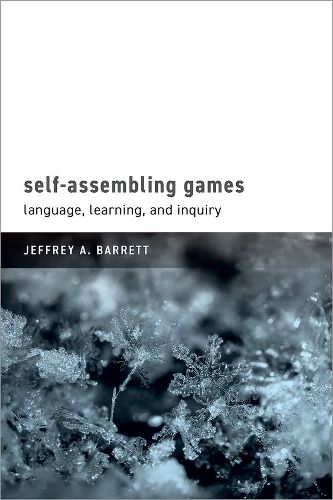
The theory of self-assembling games studies how evolutionary games emerge from basic interactions, and explores how once formed, the structure of a game may evolve on continued play. In Self Assembling Games, Jeffrey A. Barrett offers an incisive analysis of hierarchical, dialogue, and network-style games, illustrating how trial-and-error learners coevolve meaningful language and inferential capacities, how social structures that allow for more reliable learning emerge, and how learning itself develops in more sophisticated ways throughout this process.
In a philosophical exploration of self-assembling games' impact on animal and human behaviour, Barrett follows a continuous philosophical thread, providing a framework for a thoughtful pragmatic account of empirical inquiry. In demonstrating how simple agents may evolve meaningful language, useful social connections, and better ways of learning as they succeed and fail together in action, Self Assembling Games offers readers new ways of considering game-theoretic ritualization at large.
$9.00 standard shipping within Australia
FREE standard shipping within Australia for orders over $100.00
Express & International shipping calculated at checkout
Stock availability can be subject to change without notice. We recommend calling the shop or contacting our online team to check availability of low stock items. Please see our Shopping Online page for more details.
The theory of self-assembling games studies how evolutionary games emerge from basic interactions, and explores how once formed, the structure of a game may evolve on continued play. In Self Assembling Games, Jeffrey A. Barrett offers an incisive analysis of hierarchical, dialogue, and network-style games, illustrating how trial-and-error learners coevolve meaningful language and inferential capacities, how social structures that allow for more reliable learning emerge, and how learning itself develops in more sophisticated ways throughout this process.
In a philosophical exploration of self-assembling games' impact on animal and human behaviour, Barrett follows a continuous philosophical thread, providing a framework for a thoughtful pragmatic account of empirical inquiry. In demonstrating how simple agents may evolve meaningful language, useful social connections, and better ways of learning as they succeed and fail together in action, Self Assembling Games offers readers new ways of considering game-theoretic ritualization at large.
Search our extensive online catalogue.
