Readings Newsletter
Become a Readings Member to make your shopping experience even easier.
Sign in or sign up for free!
You’re not far away from qualifying for FREE standard shipping within Australia
You’ve qualified for FREE standard shipping within Australia
The cart is loading…


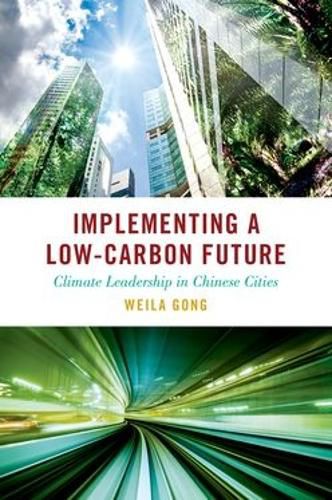
In an era of intensified geopolitics and of national-level political gridlock, subnational governments can potentially play an essential role in combating global climate change. Can subnational governments introduce and sustain climate policy actions through changes in political leadership? Why do some local areas continue to deliver on their climate goals while others struggle to do so? Despite being the world's largest carbon emitter, China has pledged to attain peak carbon before 2030 and carbon neutrality before 2060. Since the early 2010s, Beijing has selected more than one hundred local low-carbon pilots at the township, municipal, and provincial levels to engage in policy experimentation. Their aim is policy solutions to decouple local economic growth from the increased use of fossil fuels. In Implementing a Low-Carbon Future, Weila Gong examines four cases of such policy experimentation and finds that local implementation outcomes were mixed. Notably, Gong finds variation in levels of low-carbon policy institutionalization across the case studies. This includes varying successes of the standards, regulations, and laws put into place through these policy experiments. Based on original research including expert interviews, comparative case studies, and process tracing of the low-carbon policy experimentation in these pilot cities, Gong opens the black box of the subnational climate policy process in China's centralized political system and identifies mid-level local bureaucrats as playing an essential "bridge leader" role in successful implementation.
$9.00 standard shipping within Australia
FREE standard shipping within Australia for orders over $100.00
Express & International shipping calculated at checkout
Stock availability can be subject to change without notice. We recommend calling the shop or contacting our online team to check availability of low stock items. Please see our Shopping Online page for more details.
In an era of intensified geopolitics and of national-level political gridlock, subnational governments can potentially play an essential role in combating global climate change. Can subnational governments introduce and sustain climate policy actions through changes in political leadership? Why do some local areas continue to deliver on their climate goals while others struggle to do so? Despite being the world's largest carbon emitter, China has pledged to attain peak carbon before 2030 and carbon neutrality before 2060. Since the early 2010s, Beijing has selected more than one hundred local low-carbon pilots at the township, municipal, and provincial levels to engage in policy experimentation. Their aim is policy solutions to decouple local economic growth from the increased use of fossil fuels. In Implementing a Low-Carbon Future, Weila Gong examines four cases of such policy experimentation and finds that local implementation outcomes were mixed. Notably, Gong finds variation in levels of low-carbon policy institutionalization across the case studies. This includes varying successes of the standards, regulations, and laws put into place through these policy experiments. Based on original research including expert interviews, comparative case studies, and process tracing of the low-carbon policy experimentation in these pilot cities, Gong opens the black box of the subnational climate policy process in China's centralized political system and identifies mid-level local bureaucrats as playing an essential "bridge leader" role in successful implementation.
Search our extensive online catalogue.
