Readings Newsletter
Become a Readings Member to make your shopping experience even easier.
Sign in or sign up for free!
You’re not far away from qualifying for FREE standard shipping within Australia
You’ve qualified for FREE standard shipping within Australia
The cart is loading…


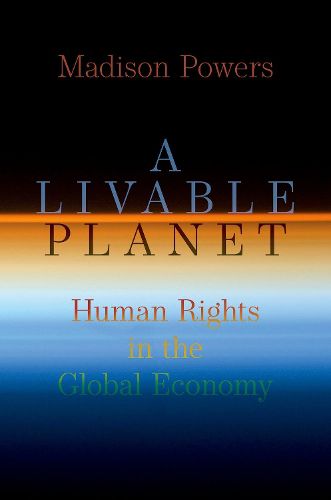
Humanity faces an ecological predicament, consisting of a cluster of concurrent, mutually reinforcing crises. They are causally intertwined and resistant to resolution in isolation. In addition to climate disruption, the cluster includes land-system change, loss of biodiversity and biosphere integrity, alteration of biogeochemical cycles, and decreased freshwater availability. Madison Powers argues for a targeted human rights approach to the resolution of our predicament. He assigns priority to a bundle of rights strategically important for counteracting ecologically unsustainable, economically predatory market practices. These practices exhaust natural resources or degrade the environmental conditions essential for a livable planet. Their harmful ecological effects result from or are exacerbated by the structure of the global political economy, especially institutions that influence the acquisition, control, and use of land, energy, and water resources. These institutions shape the economic decisions that have transformed every region of the globe and altered the planetary conditions that support life on Earth. A livable planet thus requires changes in humanity's relation to the rest of nature, which in turn, requires transformation of our economic relationships and the political and economic ideals underpinning them. Specifically, the balance of power between states and markets should be reversed by implementing an enforceable institutional bulwark against market practices that subvert the ecological conditions essential for the secure realization of human rights. These practices enable the powerful to hoard economic opportunities, crowd out sustainable alternatives, extract resources from vulnerable communities, shift environmental and economic burdens, dodge political and market accountability, and hijack public institutions for private purposes.
$9.00 standard shipping within Australia
FREE standard shipping within Australia for orders over $100.00
Express & International shipping calculated at checkout
Stock availability can be subject to change without notice. We recommend calling the shop or contacting our online team to check availability of low stock items. Please see our Shopping Online page for more details.
Humanity faces an ecological predicament, consisting of a cluster of concurrent, mutually reinforcing crises. They are causally intertwined and resistant to resolution in isolation. In addition to climate disruption, the cluster includes land-system change, loss of biodiversity and biosphere integrity, alteration of biogeochemical cycles, and decreased freshwater availability. Madison Powers argues for a targeted human rights approach to the resolution of our predicament. He assigns priority to a bundle of rights strategically important for counteracting ecologically unsustainable, economically predatory market practices. These practices exhaust natural resources or degrade the environmental conditions essential for a livable planet. Their harmful ecological effects result from or are exacerbated by the structure of the global political economy, especially institutions that influence the acquisition, control, and use of land, energy, and water resources. These institutions shape the economic decisions that have transformed every region of the globe and altered the planetary conditions that support life on Earth. A livable planet thus requires changes in humanity's relation to the rest of nature, which in turn, requires transformation of our economic relationships and the political and economic ideals underpinning them. Specifically, the balance of power between states and markets should be reversed by implementing an enforceable institutional bulwark against market practices that subvert the ecological conditions essential for the secure realization of human rights. These practices enable the powerful to hoard economic opportunities, crowd out sustainable alternatives, extract resources from vulnerable communities, shift environmental and economic burdens, dodge political and market accountability, and hijack public institutions for private purposes.
Search our extensive online catalogue.
