Readings Newsletter
Become a Readings Member to make your shopping experience even easier.
Sign in or sign up for free!
You’re not far away from qualifying for FREE standard shipping within Australia
You’ve qualified for FREE standard shipping within Australia
The cart is loading…


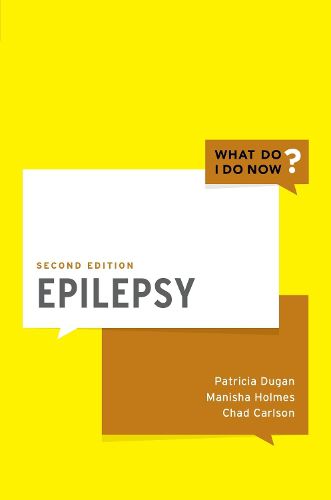
Part of the "What Do I Do Now?" series, Epilepsy (Second Edition) serves as an easy-to-use reference guide for anyone working with epilepsy patients. This book offers a case-based approach to give a holistic look at concepts for understanding and treating epilepsy. These concepts range from initial diagnosis to determining treatment options to understanding the role of epilepsy in patients' day-to-day life. Topics represent common clinical scenarios and frequent areas assessed in standardized examinations. The book includes 33 case studies and is broken up into four parts: Section 1: Diagnostic Dilemmas; Section 2: Treatment Considerations: Antiseizure Medications; Section 3: Treatment Considerations: Diagnosis and Management of Refractory Epilepsy; and Section 4: Prognostic, Neuropsychiatric, Social, and Behavioral Issues. Each case study provides a discussion of the diagnosis, key points to remember, and selected references for further reading. In this new edition, all cases and references have been updated, reflecting the advances in pharmacological treatment and understanding of epilepsy in the past ten years. Engaging and succinct, Epilepsy, Second Edition, is an essential resource for clinicians and students at any stage in their career.
$9.00 standard shipping within Australia
FREE standard shipping within Australia for orders over $100.00
Express & International shipping calculated at checkout
Stock availability can be subject to change without notice. We recommend calling the shop or contacting our online team to check availability of low stock items. Please see our Shopping Online page for more details.
Part of the "What Do I Do Now?" series, Epilepsy (Second Edition) serves as an easy-to-use reference guide for anyone working with epilepsy patients. This book offers a case-based approach to give a holistic look at concepts for understanding and treating epilepsy. These concepts range from initial diagnosis to determining treatment options to understanding the role of epilepsy in patients' day-to-day life. Topics represent common clinical scenarios and frequent areas assessed in standardized examinations. The book includes 33 case studies and is broken up into four parts: Section 1: Diagnostic Dilemmas; Section 2: Treatment Considerations: Antiseizure Medications; Section 3: Treatment Considerations: Diagnosis and Management of Refractory Epilepsy; and Section 4: Prognostic, Neuropsychiatric, Social, and Behavioral Issues. Each case study provides a discussion of the diagnosis, key points to remember, and selected references for further reading. In this new edition, all cases and references have been updated, reflecting the advances in pharmacological treatment and understanding of epilepsy in the past ten years. Engaging and succinct, Epilepsy, Second Edition, is an essential resource for clinicians and students at any stage in their career.
Search our extensive online catalogue.
