Readings Newsletter
Become a Readings Member to make your shopping experience even easier.
Sign in or sign up for free!
You’re not far away from qualifying for FREE standard shipping within Australia
You’ve qualified for FREE standard shipping within Australia
The cart is loading…


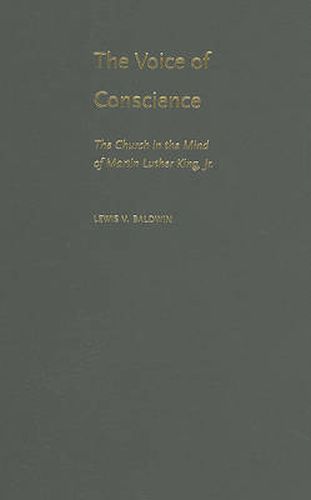
Martin Luther King, Jr. is celebrated widely as the quintessential model of Christian activism in his time, but his understanding of and vision for the church has been surprisingly neglected. In this book, Lewis V. Baldwin contends that King was fundamentally a man of the church. Beginning with King’s roots in Atlanta’s Ebenezer Baptist Church, Baldwin traces the evolution of King’s attitude toward the church through his college, seminary, graduate school, and civil rights years. The emphasis is on King’s concept of the church as the voice of conscience. Baldwin persuasively claims that King challenged the church over the need for a higher spiritual and ethical ideal, and that King’s moral leadership and eventual martyrdom did much to reestablish the credibility of the church at a time when some theologians were declaring the death of God. Baldwin critiques the contemporary church on the basis of King’s prophetic model, and concludes by insisting that this model, not the entrepreneurial spirituality of the contemporary megachurches, embodies the best potential for much-needed church renewal.
$9.00 standard shipping within Australia
FREE standard shipping within Australia for orders over $100.00
Express & International shipping calculated at checkout
Stock availability can be subject to change without notice. We recommend calling the shop or contacting our online team to check availability of low stock items. Please see our Shopping Online page for more details.
Martin Luther King, Jr. is celebrated widely as the quintessential model of Christian activism in his time, but his understanding of and vision for the church has been surprisingly neglected. In this book, Lewis V. Baldwin contends that King was fundamentally a man of the church. Beginning with King’s roots in Atlanta’s Ebenezer Baptist Church, Baldwin traces the evolution of King’s attitude toward the church through his college, seminary, graduate school, and civil rights years. The emphasis is on King’s concept of the church as the voice of conscience. Baldwin persuasively claims that King challenged the church over the need for a higher spiritual and ethical ideal, and that King’s moral leadership and eventual martyrdom did much to reestablish the credibility of the church at a time when some theologians were declaring the death of God. Baldwin critiques the contemporary church on the basis of King’s prophetic model, and concludes by insisting that this model, not the entrepreneurial spirituality of the contemporary megachurches, embodies the best potential for much-needed church renewal.
Search our extensive online catalogue.
