Readings Newsletter
Become a Readings Member to make your shopping experience even easier.
Sign in or sign up for free!
You’re not far away from qualifying for FREE standard shipping within Australia
You’ve qualified for FREE standard shipping within Australia
The cart is loading…


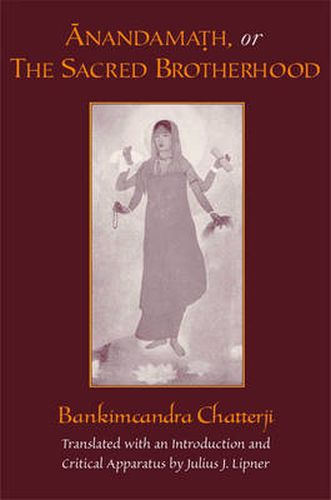
Winner of the A.K. Ramanujan Prize for Annotated TranslationThis is a translation of a historically important Bengali novel. Published in 1882, Chatterji’s Anandamath helped create the atmosphere and the symbolism for the nationalist movement leading to Indian independence in 1947. It contains the famous hymn Vande Mataram ( I revere the Mother ), which has become India’s official National Song. Set in Bengal at the time of the famine of 1770, the novel reflects tensions and oppositions within Indian culture between Hindus and Muslims, ruler and ruled, indigenous people and foreign overlords, jungle and town, Aryan and non-Aryan, celibacy and sexuality. It is both a political and a religious work. By recreating the past of Bengal, Chatterji hoped to create a new present that involved a new interpretation of the past. Julius Lipner not only provides the first complete and satisfactory English translation of this important work, but supplies an extensive Introduction contextualizing the novel and its cultural and political history. Also included are notes offering the Bengali or Sanskrit terms for certain words, as well as explanatory notes for the specialized lay reader or scholar.
$9.00 standard shipping within Australia
FREE standard shipping within Australia for orders over $100.00
Express & International shipping calculated at checkout
Stock availability can be subject to change without notice. We recommend calling the shop or contacting our online team to check availability of low stock items. Please see our Shopping Online page for more details.
Winner of the A.K. Ramanujan Prize for Annotated TranslationThis is a translation of a historically important Bengali novel. Published in 1882, Chatterji’s Anandamath helped create the atmosphere and the symbolism for the nationalist movement leading to Indian independence in 1947. It contains the famous hymn Vande Mataram ( I revere the Mother ), which has become India’s official National Song. Set in Bengal at the time of the famine of 1770, the novel reflects tensions and oppositions within Indian culture between Hindus and Muslims, ruler and ruled, indigenous people and foreign overlords, jungle and town, Aryan and non-Aryan, celibacy and sexuality. It is both a political and a religious work. By recreating the past of Bengal, Chatterji hoped to create a new present that involved a new interpretation of the past. Julius Lipner not only provides the first complete and satisfactory English translation of this important work, but supplies an extensive Introduction contextualizing the novel and its cultural and political history. Also included are notes offering the Bengali or Sanskrit terms for certain words, as well as explanatory notes for the specialized lay reader or scholar.
Search our extensive online catalogue.
