Readings Newsletter
Become a Readings Member to make your shopping experience even easier.
Sign in or sign up for free!
You’re not far away from qualifying for FREE standard shipping within Australia
You’ve qualified for FREE standard shipping within Australia
The cart is loading…


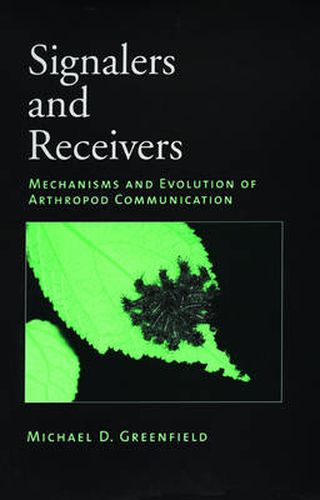
In most terrestrial and aquatic habitats, the vast majority of animals transmitting and receiving communicative signals are arthropods. This book presents the story of how this important group of animals use pheromones, sound, vibration, and light for sexual and social communication. Because of their small to minute body size most arthropods have problems sending and receiving acoustic and optical information, each of which have their own severe constraints. Because of these restraints they have developed chemical signaling which is not similarly limited by scale. Presenting the latest theoretical and experimental findings from studies of signaling, it suggests that close parallels between arthropods and vertebrates reflect a very limited number of solutions to problems in behavior that are available within the confines of physical laws.
$9.00 standard shipping within Australia
FREE standard shipping within Australia for orders over $100.00
Express & International shipping calculated at checkout
Stock availability can be subject to change without notice. We recommend calling the shop or contacting our online team to check availability of low stock items. Please see our Shopping Online page for more details.
In most terrestrial and aquatic habitats, the vast majority of animals transmitting and receiving communicative signals are arthropods. This book presents the story of how this important group of animals use pheromones, sound, vibration, and light for sexual and social communication. Because of their small to minute body size most arthropods have problems sending and receiving acoustic and optical information, each of which have their own severe constraints. Because of these restraints they have developed chemical signaling which is not similarly limited by scale. Presenting the latest theoretical and experimental findings from studies of signaling, it suggests that close parallels between arthropods and vertebrates reflect a very limited number of solutions to problems in behavior that are available within the confines of physical laws.
Search our extensive online catalogue.
