Readings Newsletter
Become a Readings Member to make your shopping experience even easier.
Sign in or sign up for free!
You’re not far away from qualifying for FREE standard shipping within Australia
You’ve qualified for FREE standard shipping within Australia
The cart is loading…


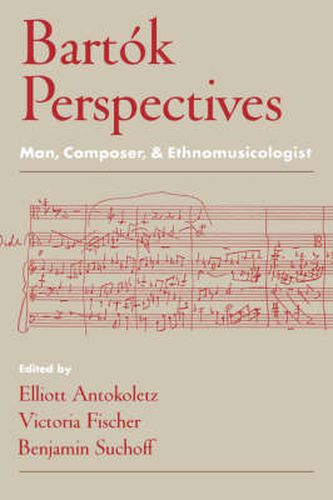
This compilation of essays spans a wide range of individual perspectives within the varied disciplines related to Bartok’s life and work. The nineteen chapters together constitute a broad yet integrated picture of the Hungarian composer’s contributions to twentieth-century music and scholarship. While self-contained, each chapter contributes to a larger scheme of interrelated subjects that provide a coherent view of the Bartok field. The book also contains integrative theoretic-analytical approaches to Bartok’s musical language that demonstrate relations between the modalities and rhythms of folk music and his more abstract musical principles. Some chapters examine Bartok’s folk-music materials in connection with his fieldwork, transcription techniques, classification methodology, and compositional influences. Other chapters explore Bartok’s system of composition from its early stages to maturity by way of his abstract works and his folk-music transcriptions. The book also addresses the relevance of Bartok’s work to broader historical, philosophical, and folkloristic, compositional, performance, and reception issues.
$9.00 standard shipping within Australia
FREE standard shipping within Australia for orders over $100.00
Express & International shipping calculated at checkout
Stock availability can be subject to change without notice. We recommend calling the shop or contacting our online team to check availability of low stock items. Please see our Shopping Online page for more details.
This compilation of essays spans a wide range of individual perspectives within the varied disciplines related to Bartok’s life and work. The nineteen chapters together constitute a broad yet integrated picture of the Hungarian composer’s contributions to twentieth-century music and scholarship. While self-contained, each chapter contributes to a larger scheme of interrelated subjects that provide a coherent view of the Bartok field. The book also contains integrative theoretic-analytical approaches to Bartok’s musical language that demonstrate relations between the modalities and rhythms of folk music and his more abstract musical principles. Some chapters examine Bartok’s folk-music materials in connection with his fieldwork, transcription techniques, classification methodology, and compositional influences. Other chapters explore Bartok’s system of composition from its early stages to maturity by way of his abstract works and his folk-music transcriptions. The book also addresses the relevance of Bartok’s work to broader historical, philosophical, and folkloristic, compositional, performance, and reception issues.
Search our extensive online catalogue.
