Readings Newsletter
Become a Readings Member to make your shopping experience even easier.
Sign in or sign up for free!
You’re not far away from qualifying for FREE standard shipping within Australia
You’ve qualified for FREE standard shipping within Australia
The cart is loading…


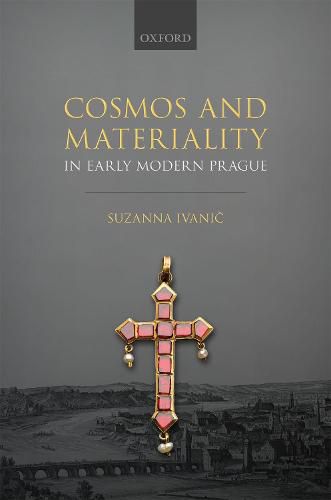
Prague in the seventeenth century is known as home to a scintillating imperial court crammed with exotic goods, scientists, and artisans, receiving ambassadors from Persia, and also as a city suffering plagues, riots, and devastating military attacks. But Prague was also the setting for a complex and shifting spiritual world. At the beginning of the century it was a multiconfessional city, but by 1700 it represented one of the most archetypical Catholic cities in Europe. Through a material approach, Cosmos and Materiality pieces together how early modern men and women experienced this transformation on a daily basis. Cosmos and Materiality in Early Modern Prague presents a bold alternative understanding of the history of early modern religion in Central Europe. The history of religion in the early modern period has overwhelmingly been analysed through a confessional lens, but this book shows how Prague’s spiritual worlds were embedded in their natural environment and social relations as much if not more than in confessional identity in the seventeenth century. While texts in this period trace emerging discourses around notions of religion, superstition, magic, and what it was to be Catholic or Protestant, a material approach avoids these category mistakes being applied to everyday practice. It is through a rich seam of material evidence in Prague - spoons, glass beakers, and amulets as much as traditional devotional objects like rosaries and garnet encrusted crucifixes - that everyday beliefs, practices, and identities can be recovered.
$9.00 standard shipping within Australia
FREE standard shipping within Australia for orders over $100.00
Express & International shipping calculated at checkout
Stock availability can be subject to change without notice. We recommend calling the shop or contacting our online team to check availability of low stock items. Please see our Shopping Online page for more details.
Prague in the seventeenth century is known as home to a scintillating imperial court crammed with exotic goods, scientists, and artisans, receiving ambassadors from Persia, and also as a city suffering plagues, riots, and devastating military attacks. But Prague was also the setting for a complex and shifting spiritual world. At the beginning of the century it was a multiconfessional city, but by 1700 it represented one of the most archetypical Catholic cities in Europe. Through a material approach, Cosmos and Materiality pieces together how early modern men and women experienced this transformation on a daily basis. Cosmos and Materiality in Early Modern Prague presents a bold alternative understanding of the history of early modern religion in Central Europe. The history of religion in the early modern period has overwhelmingly been analysed through a confessional lens, but this book shows how Prague’s spiritual worlds were embedded in their natural environment and social relations as much if not more than in confessional identity in the seventeenth century. While texts in this period trace emerging discourses around notions of religion, superstition, magic, and what it was to be Catholic or Protestant, a material approach avoids these category mistakes being applied to everyday practice. It is through a rich seam of material evidence in Prague - spoons, glass beakers, and amulets as much as traditional devotional objects like rosaries and garnet encrusted crucifixes - that everyday beliefs, practices, and identities can be recovered.
Search our extensive online catalogue.
