Readings Newsletter
Become a Readings Member to make your shopping experience even easier.
Sign in or sign up for free!
You’re not far away from qualifying for FREE standard shipping within Australia
You’ve qualified for FREE standard shipping within Australia
The cart is loading…


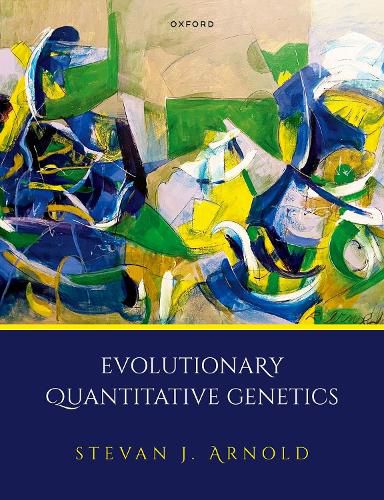
Evolutionary quantitative genetics (EQG) provides a formal theoretical foundation for quantitatively linking natural selection and genetic variation to the rate and expanse of adaptive evolution. It has become the dominant conceptual framework for interpreting the evolution of quantitative traits in terms of elementary forces (mutation, inheritance, selection, and drift). Despite this success, the relevance of EQG to many biological scenarios remains relatively unappreciated, with numerous fields yet to fully embrace its approach. Part of the reason for this lag is that conceptual advances in EQG have not yet been fully synthesized and made accessible to a wider academic audience. A comprehensive, accessible overview is therefore now timely, and Evolutionary Quantitative Genetics provides this much-needed synthesis.The central argument of the book is that an adaptive landscape concept can be used to understand both evolutionary process within lineages and the pattern of adaptive radiations. In particular, it provides a convincing argument that models with a moving adaptive peak carry us further than any other conceptual approach yet devised. Although additive theory holds center stage, the book mentions and references departures from additivity including non-Gaussian distributions of allelic effects, dominance, epistasis, maternal effects and phenotypic plasticity. This accessible, advanced textbook is aimed principally at students (from senior undergraduate to postgraduate) as well as practising scientists in the fields of evolutionary biology, ecology, physiology, functional morphology, developmental biology, comparative biology, paleontology, and beyond who are interested in how adaptive radiations are produced by evolutionary and ecological processes.
$9.00 standard shipping within Australia
FREE standard shipping within Australia for orders over $100.00
Express & International shipping calculated at checkout
Stock availability can be subject to change without notice. We recommend calling the shop or contacting our online team to check availability of low stock items. Please see our Shopping Online page for more details.
Evolutionary quantitative genetics (EQG) provides a formal theoretical foundation for quantitatively linking natural selection and genetic variation to the rate and expanse of adaptive evolution. It has become the dominant conceptual framework for interpreting the evolution of quantitative traits in terms of elementary forces (mutation, inheritance, selection, and drift). Despite this success, the relevance of EQG to many biological scenarios remains relatively unappreciated, with numerous fields yet to fully embrace its approach. Part of the reason for this lag is that conceptual advances in EQG have not yet been fully synthesized and made accessible to a wider academic audience. A comprehensive, accessible overview is therefore now timely, and Evolutionary Quantitative Genetics provides this much-needed synthesis.The central argument of the book is that an adaptive landscape concept can be used to understand both evolutionary process within lineages and the pattern of adaptive radiations. In particular, it provides a convincing argument that models with a moving adaptive peak carry us further than any other conceptual approach yet devised. Although additive theory holds center stage, the book mentions and references departures from additivity including non-Gaussian distributions of allelic effects, dominance, epistasis, maternal effects and phenotypic plasticity. This accessible, advanced textbook is aimed principally at students (from senior undergraduate to postgraduate) as well as practising scientists in the fields of evolutionary biology, ecology, physiology, functional morphology, developmental biology, comparative biology, paleontology, and beyond who are interested in how adaptive radiations are produced by evolutionary and ecological processes.
Search our extensive online catalogue.
