Readings Newsletter
Become a Readings Member to make your shopping experience even easier.
Sign in or sign up for free!
You’re not far away from qualifying for FREE standard shipping within Australia
You’ve qualified for FREE standard shipping within Australia
The cart is loading…


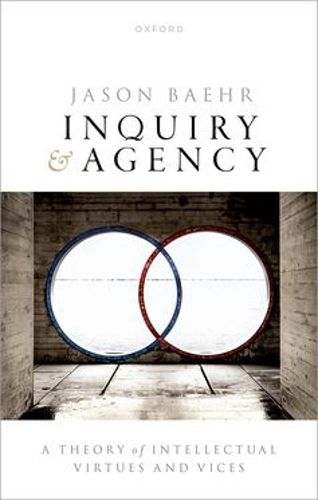
In Inquiry and Agency, Jason Baehr develops a systematic account of the nature, structure, and evaluative status of intellectual virtues and vices. Drawing on a theory of moral virtue by Robert Adams (2006), Baehr argues that intellectual virtues like curiosity, open-mindedness, and intellectual courage are ways of "excellently being for epistemic goods" that reflect favorably on who we are as persons, and that intellectual vices like dogmatism, narrow-mindedness, and intellectual arrogance are ways of falling short of this standard that contribute negatively to our personal worth. Inquiry and Agency is the most in-depth and systematic treatment of intellectual virtues and vices since Linda Zagzebski's pioneering work Virtues of the Mind (1996). While advancing several debates in virtue epistemology, it proposes a model of intellectual virtues and vices that will be accessible to non-experts and useful to researchers in other disciplines. Inquiry and Agency is the product of decades of reflection by a leading virtue epistemologist. It is essential reading for anyone interested in the characterological dimensions of the life of the mind.
$9.00 standard shipping within Australia
FREE standard shipping within Australia for orders over $100.00
Express & International shipping calculated at checkout
Stock availability can be subject to change without notice. We recommend calling the shop or contacting our online team to check availability of low stock items. Please see our Shopping Online page for more details.
In Inquiry and Agency, Jason Baehr develops a systematic account of the nature, structure, and evaluative status of intellectual virtues and vices. Drawing on a theory of moral virtue by Robert Adams (2006), Baehr argues that intellectual virtues like curiosity, open-mindedness, and intellectual courage are ways of "excellently being for epistemic goods" that reflect favorably on who we are as persons, and that intellectual vices like dogmatism, narrow-mindedness, and intellectual arrogance are ways of falling short of this standard that contribute negatively to our personal worth. Inquiry and Agency is the most in-depth and systematic treatment of intellectual virtues and vices since Linda Zagzebski's pioneering work Virtues of the Mind (1996). While advancing several debates in virtue epistemology, it proposes a model of intellectual virtues and vices that will be accessible to non-experts and useful to researchers in other disciplines. Inquiry and Agency is the product of decades of reflection by a leading virtue epistemologist. It is essential reading for anyone interested in the characterological dimensions of the life of the mind.
Search our extensive online catalogue.
