Readings Newsletter
Become a Readings Member to make your shopping experience even easier.
Sign in or sign up for free!
You’re not far away from qualifying for FREE standard shipping within Australia
You’ve qualified for FREE standard shipping within Australia
The cart is loading…


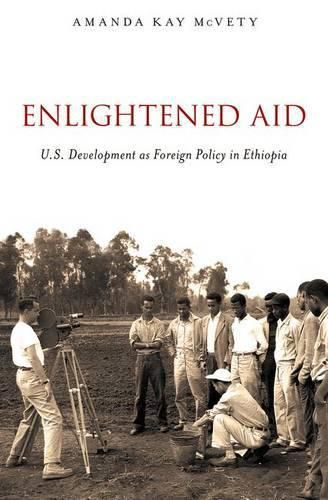
Enlightened Aid is a unique history of foreign aid. The book begins with the modern concept of progress in the Scottish Enlightenment, follows the development of this concept in nineteenth- and early twentieth-century economics and anthropology, describes its transformation from a concept into a tool of foreign policy, and ends with the current debate about foreign aid’s utility. In his 1949 inaugural address, Harry Truman vowed to make the development of the underdeveloped world a central part of the U.S. government’s national security agenda. This commitment became policy the following year with the creation of Point Four–America’s first aid program to the developing world. Point Four technicians shared technology, know-how, and capital with people in nations around the world. They taught classes on public health and irrigation, distributed chickens and vaccines, and helped build schools and water treatment facilities. They did all of this in the name of development, believing that economic progress would lead to social and political progress, which, in turn, would ensure that Point Four recipient nations would become prosperous democratic participants in the global community of nations. Point Four was a weapon in the fight against poverty, but it was also a weapon in the fight against the Soviet Union. Eisenhower reluctantly embraced it and Kennedy made it a central part of his international policy agenda, turning Truman’s program into the United States Agency for International Development. Point Four had proven itself to be a useful tool of diplomacy, and subsequent administrations claimed it for themselves. None seemed overly worried that it had not also proven itself to be a particularly useful tool of development. Using Ethiopia as a case study, Enlightened Aid examines the struggle between foreign aid-for-diplomacy and foreign aid-for-development. Point Four’s creators believed that aid could be both at the same time. The history of U.S. aid to Ethiopia suggests otherwise.
$9.00 standard shipping within Australia
FREE standard shipping within Australia for orders over $100.00
Express & International shipping calculated at checkout
Stock availability can be subject to change without notice. We recommend calling the shop or contacting our online team to check availability of low stock items. Please see our Shopping Online page for more details.
Enlightened Aid is a unique history of foreign aid. The book begins with the modern concept of progress in the Scottish Enlightenment, follows the development of this concept in nineteenth- and early twentieth-century economics and anthropology, describes its transformation from a concept into a tool of foreign policy, and ends with the current debate about foreign aid’s utility. In his 1949 inaugural address, Harry Truman vowed to make the development of the underdeveloped world a central part of the U.S. government’s national security agenda. This commitment became policy the following year with the creation of Point Four–America’s first aid program to the developing world. Point Four technicians shared technology, know-how, and capital with people in nations around the world. They taught classes on public health and irrigation, distributed chickens and vaccines, and helped build schools and water treatment facilities. They did all of this in the name of development, believing that economic progress would lead to social and political progress, which, in turn, would ensure that Point Four recipient nations would become prosperous democratic participants in the global community of nations. Point Four was a weapon in the fight against poverty, but it was also a weapon in the fight against the Soviet Union. Eisenhower reluctantly embraced it and Kennedy made it a central part of his international policy agenda, turning Truman’s program into the United States Agency for International Development. Point Four had proven itself to be a useful tool of diplomacy, and subsequent administrations claimed it for themselves. None seemed overly worried that it had not also proven itself to be a particularly useful tool of development. Using Ethiopia as a case study, Enlightened Aid examines the struggle between foreign aid-for-diplomacy and foreign aid-for-development. Point Four’s creators believed that aid could be both at the same time. The history of U.S. aid to Ethiopia suggests otherwise.
Search our extensive online catalogue.
