Readings Newsletter
Become a Readings Member to make your shopping experience even easier.
Sign in or sign up for free!
You’re not far away from qualifying for FREE standard shipping within Australia
You’ve qualified for FREE standard shipping within Australia
The cart is loading…


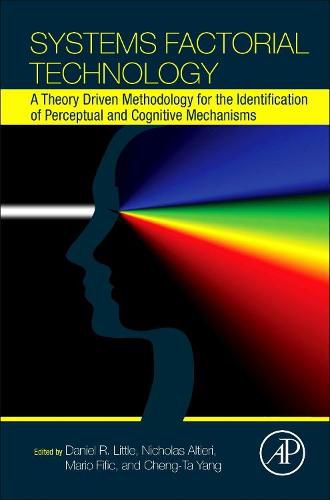
Systems Factorial Technology: A Theory Driven Methodology for the Identification of Perceptual and Cognitive Mechanisms explores the theoretical and methodological tools used to investigate fundamental questions central to basic psychological and perceptual processes. Such processes include detection, identification, classification, recognition, and decision-making.
This book collects the tools that allow researchers to deal with the pervasive model mimicry problems which exist in standard experimental and theoretical paradigms and includes novel applications to not only basic psychological questions, but also clinical diagnosis and links to neuroscience.
Researchers can use this book to begin using the methodology behind SFT and to get an overview of current uses and future directions. The collected developments and applications of SFT allow us to peer inside the human mind and provide strong constraints on psychological theory.
$9.00 standard shipping within Australia
FREE standard shipping within Australia for orders over $100.00
Express & International shipping calculated at checkout
Stock availability can be subject to change without notice. We recommend calling the shop or contacting our online team to check availability of low stock items. Please see our Shopping Online page for more details.
Systems Factorial Technology: A Theory Driven Methodology for the Identification of Perceptual and Cognitive Mechanisms explores the theoretical and methodological tools used to investigate fundamental questions central to basic psychological and perceptual processes. Such processes include detection, identification, classification, recognition, and decision-making.
This book collects the tools that allow researchers to deal with the pervasive model mimicry problems which exist in standard experimental and theoretical paradigms and includes novel applications to not only basic psychological questions, but also clinical diagnosis and links to neuroscience.
Researchers can use this book to begin using the methodology behind SFT and to get an overview of current uses and future directions. The collected developments and applications of SFT allow us to peer inside the human mind and provide strong constraints on psychological theory.
Search our extensive online catalogue.
