Readings Newsletter
Become a Readings Member to make your shopping experience even easier.
Sign in or sign up for free!
You’re not far away from qualifying for FREE standard shipping within Australia
You’ve qualified for FREE standard shipping within Australia
The cart is loading…


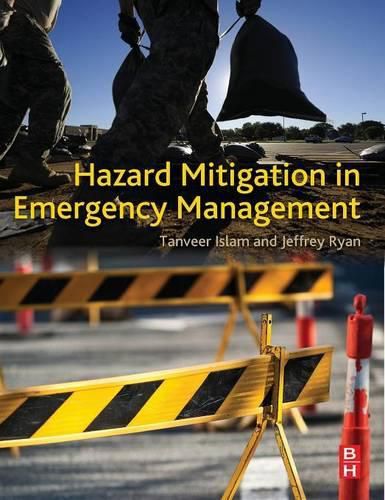
Hazard Mitigation in Emergency Management introduces readers to mitigation, one of the four foundational phases of emergency management, and to the hazard mitigation planning process.
Authors Islam and Ryan review the hazard mitigation framework in both private sector and governmental agencies, covering the regulatory and legal frameworks for mitigation, as well as risk assessment processes and strategies, and tools and techniques that can prevent, or lessen, the impact of disasters.
The book specifically addresses hazards posed by human activity, including cyber threats and nuclear accidents, as well as hurricanes, floods, and earthquakes. Readers will learn about the framework for the mitigation process, hazard identification, risk assessment, and the tools and techniques available for mitigation.
Coverage includes both GIS and HAZUS, with tutorials on these technologies, as well as case studies of best practices in the United States and around the world. The text is ideal for students, instructors, and practitioners interested in reducing, or eliminating, the effects of disasters.
$9.00 standard shipping within Australia
FREE standard shipping within Australia for orders over $100.00
Express & International shipping calculated at checkout
Stock availability can be subject to change without notice. We recommend calling the shop or contacting our online team to check availability of low stock items. Please see our Shopping Online page for more details.
Hazard Mitigation in Emergency Management introduces readers to mitigation, one of the four foundational phases of emergency management, and to the hazard mitigation planning process.
Authors Islam and Ryan review the hazard mitigation framework in both private sector and governmental agencies, covering the regulatory and legal frameworks for mitigation, as well as risk assessment processes and strategies, and tools and techniques that can prevent, or lessen, the impact of disasters.
The book specifically addresses hazards posed by human activity, including cyber threats and nuclear accidents, as well as hurricanes, floods, and earthquakes. Readers will learn about the framework for the mitigation process, hazard identification, risk assessment, and the tools and techniques available for mitigation.
Coverage includes both GIS and HAZUS, with tutorials on these technologies, as well as case studies of best practices in the United States and around the world. The text is ideal for students, instructors, and practitioners interested in reducing, or eliminating, the effects of disasters.
Search our extensive online catalogue.
