

Readings' bookseller and chair of judges for The Readings New Australian Fiction Prize 2025 Teddy Peak shares some of the year's best debut novels from Australian authors.
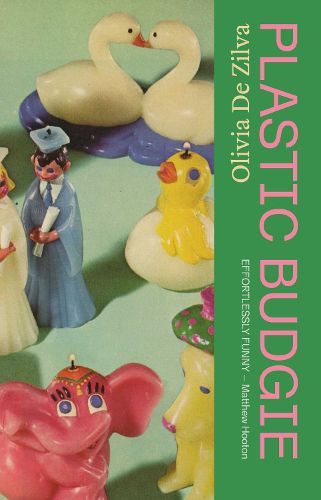
Plastic Budgie
Olivia De Zilva
Plastic Budgie is a raw and funny autofiction, filled with Y2K nostalgia that will have you itching for your youth and glad to be rid of it. The novel starts with the main character Olivia (named both for the author and for the lycra wearing singer her parents' saw on Rage) imagining the moment of her birth – her mother in hospital, her father watching TV, her grandparents working, the doctor working through a hangover. The rest of the novel is as fun, weird, and painful.
Set in Adelaide, Olivia trawls the Central Markets with all the other immigrant kids, shows up nervous to her first day of Christian school with her Cantonese grandparents in tow, gets her heart broken after a school disco. Olivia lives a life familiar to us all, and yet a life also filled with glimmers of weirdness, hope, and birds.
What Kept You?
Raaza Jamshed
Jahan speaks her coming-of-age story to her grandmother, filtering her life through her grandmother’s stories – fiction and nonfiction, and the folklore and memories that blur the two. Raised in Pakistan, British colonial violence and partition is never far, haunting Jahan even after she moves to Australia. There Jahan must contend with the violence bushfires wreak on the land, with the violence a miscarriage wreaks on her body, with the realities of violence against women in Australia.
What Kept You? is not a story of violence though, but a story of agency, a story of choosing our own stories. Written in expressive and hypnotic prose, it can’t be missed.
The Passenger Seat
Vijay Khurana
Troubled teenagers Adam and Teddy leave their small town on a road trip, traversing not just the highways of America but also the journey between boyhood and manhood. While they have a map to navigate their driving, navigating their masculinity is less easy – and at a routine driving break, they make a deadly mistake they cannot undo.
Khurana handles this tension with mastery, taking us deftly from twist to twist, fully in control of the narrative. In a crisis of masculinity, The Passenger Seat treats its boys with compassion, but never excuses their wrongs; it removes masculinity from its assumed neutrality, and makes it visible, showing us its very worst and paving the way for its very best.
The Confidence Woman
Sophie Quick
Christina is a single mother, living with her son in a granny flat in Melbourne’s suburbs, desperately trying to create a better life. Her online coaching business targets the wealthy and unconfident, promising that she, under the alias of Dr Ruth Carlisle, a ‘high performance mindset expert’, will improve their lives. Through these coaching sessions, we get to laugh at the frivolous concerns of her clients – influencers, nepotism CEOs, wannabe entrepreneurs – while also relating deeply to the more mundane concerns of Chrissy – her son’s school bake sale, breaking into the property market, fostering a good relationship with her landlord.
However, when Chrissy takes on a client different from the rest, things start to unravel … The Confidence Woman asks us what it means to create a meaningful life, and laughs with us as it does.
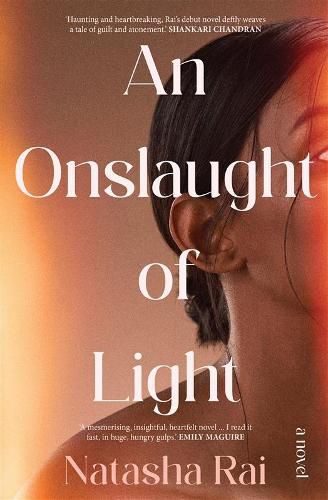
An Onslaught of Light
Natasha Rai
In 2022, Archana parties, works hard, sleeps with girls she doesn’t like, ignores her friends’ advice, and never ever lets herself feel or remember.
In 1990, her parents, gentle Indu and ambitious Vijay, immigrate from India to Australia, throwing themselves into an unfamiliar culture that excludes, racialises and neglects.
Arch is unable to forgive her parents for the Australia they failed to protect her from, nor from their own failures in the home – her father’s anger, her mother’s depression. So, when her brother calls and tells her their father is unwell, she is reluctant to help. However, as he gets worse, she has no choice, forcing her to confront not only her father, but her queerness, her heritage and her home.
Only through opening herself to this onslaught of life can Arch open herself again to love, to friendship, and ultimately, to herself. An Onslaught of Light is a gorgeous meditation on becoming and re-becoming.
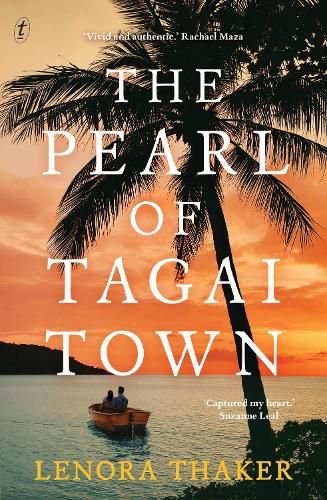
The Pearl of Tagai Town
Lenora Thaker
In this gorgeous Australian historical fiction, Torres Strait Islander woman Pearl lives in a Shanty Town on the far northeast coast of Australia, based on the town that the author’s dad grew up in. Living in the early twentieth century, Pearl must contend with racism, especially when she is offered a job in a nearby white town and must face white customers’ prejudice. Her secret romance with the bank manager’s son offers her hope, but when he is conscripted in the Second World War, it feels like all is over.
A powerful and beautiful novel on identity, love, community and sustenance, this is essential reading for readers of historical fiction, romance and First Nations novels alike.
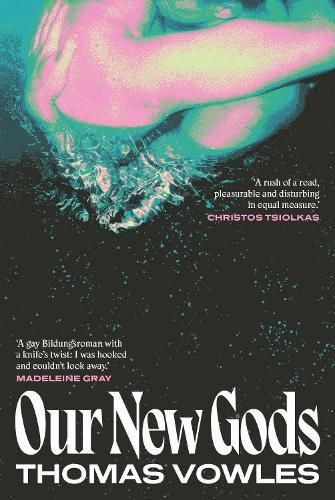
Our New Gods
Thomas Vowles
The Melbourne queer scene of Our New Gods is as messy, beautiful and complicated as it is in real life.
Our main character, Ash, has moved from his small country town to experience the relief of the Melbourne gay scene, but bites off more than he can chew when he starts to crush on his Grindr-hook-up-turned-friend, James. To make matters worse, James introduces Ash to his beautiful new boyfriend, Raf, who Ash suspects is violent and even dangerous. As Ash starts to investigate, he gets caught in a haze of obsession where reality and illusion start to blur.
A seductive queer thriller, this novel will keep you on the edge of your seat, and will make you sink into the depths of fantasy.

Rytual
Chloe Elisabeth Wilson
When Marnie Sellick is recruited as an employee to the coveted and secretive beauty brand, rytual cosmetica, she can hardly believe her luck – and it gets even better when the alluring CEO, Luna, takes a shine to her. The all-female staff of rytual share gossip, beauty tips, smoked almond snacks, and stories of men who have wronged them. However, this immersive culture, and the hypnotic attention of Luna, runs deeper than it seems, and compulsory Friday Night Drinks reveal a dark twist.
Rytual is a cutting critique of the beauty industry and the cult-like following it can inspire, but also a critique of cultures that centre capitalism’s fixed and rigid understandings of identity. What emotion lies at the heart of bettering ourselves? And does it really serve us? Chloe Elisabeth Wilson suggests that the industry cannot answer this – only we can.
Find more recommended debut fiction here!
