Readings Newsletter
Become a Readings Member to make your shopping experience even easier.
Sign in or sign up for free!
You’re not far away from qualifying for FREE standard shipping within Australia
You’ve qualified for FREE standard shipping within Australia
The cart is loading…


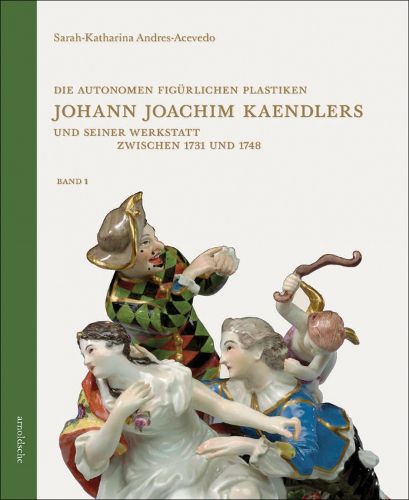
Johann Joachim Kaendler (17061775) is ranked among the most important personalities in the history of the Meissen Porcelain Manufactory.
He and his foremost three workshop assistants - Johann Friedrich Eberlein (16961749), Johann Gottlieb Ehder (1716/171750), and Peter Reinicke (17111768) - contributed substantially to the appearance of Meissen porcelain in the first half of the eighteenth century. The output of the workshop is the focus of this two-volume publication.
Volume 1 provides an overview of the manufactory's founding and presents the evolution of independent figurative porcelain from the Kaendler workshop. It concludes with a complete transcript of the work reports by Eberlein, Ehder, and Reinicke up to 1748.
Volume 2 presents a catalogue of 998 models based on the work reports of Kaendler and his foremost colleagues, enabling us to view the figurative porcelains in the order of production, determine possible connections, and recognise stylistic changes.
$9.00 standard shipping within Australia
FREE standard shipping within Australia for orders over $100.00
Express & International shipping calculated at checkout
Stock availability can be subject to change without notice. We recommend calling the shop or contacting our online team to check availability of low stock items. Please see our Shopping Online page for more details.
Johann Joachim Kaendler (17061775) is ranked among the most important personalities in the history of the Meissen Porcelain Manufactory.
He and his foremost three workshop assistants - Johann Friedrich Eberlein (16961749), Johann Gottlieb Ehder (1716/171750), and Peter Reinicke (17111768) - contributed substantially to the appearance of Meissen porcelain in the first half of the eighteenth century. The output of the workshop is the focus of this two-volume publication.
Volume 1 provides an overview of the manufactory's founding and presents the evolution of independent figurative porcelain from the Kaendler workshop. It concludes with a complete transcript of the work reports by Eberlein, Ehder, and Reinicke up to 1748.
Volume 2 presents a catalogue of 998 models based on the work reports of Kaendler and his foremost colleagues, enabling us to view the figurative porcelains in the order of production, determine possible connections, and recognise stylistic changes.
Search our extensive online catalogue.
