Readings Newsletter
Become a Readings Member to make your shopping experience even easier.
Sign in or sign up for free!
You’re not far away from qualifying for FREE standard shipping within Australia
You’ve qualified for FREE standard shipping within Australia
The cart is loading…


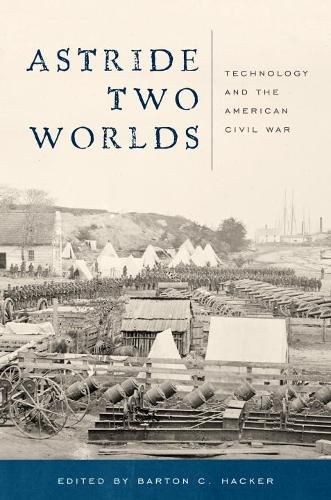
Explores the United States’ transition into an industrial nation during the time of the Civil War, and how this transition affected life on the battleground and the home front.
By the middle of the nineteenth century, industrialization and military-technological innovation were beginning to alter drastically the character and conditions of warfare as it had been conducted for centuries. Occurring in the midst of these far-reaching changes, the American Civil War straddled two ages; it can justly be labeled both the last great preindustrial war and the first major war of the industrial age.
The United States was not yet an industrial nation in 1861–the new-born Confederacy even less so–but the process of industrialization was well under way, though more in the North than the South. Industrial capacity attained new levels of military significance as transportation improved, but in this, as in many other respects, the Civil War was distinctly transitional. Smoothbore artillery still dominated the battlefield, horse-drawn wagons and pack mules still carried the main logistic burden, and seamstresses still outnumbered sewing-machine operators.
In an international symposium held at the Smithsonian’s National Museum of American History in November 2012, scholars addressed a variety of topics related to the causes and consequences of technological change for the course and outcome of the American Civil War. Astride Two Worlds includes a selection of the best papers.
$9.00 standard shipping within Australia
FREE standard shipping within Australia for orders over $100.00
Express & International shipping calculated at checkout
Stock availability can be subject to change without notice. We recommend calling the shop or contacting our online team to check availability of low stock items. Please see our Shopping Online page for more details.
Explores the United States’ transition into an industrial nation during the time of the Civil War, and how this transition affected life on the battleground and the home front.
By the middle of the nineteenth century, industrialization and military-technological innovation were beginning to alter drastically the character and conditions of warfare as it had been conducted for centuries. Occurring in the midst of these far-reaching changes, the American Civil War straddled two ages; it can justly be labeled both the last great preindustrial war and the first major war of the industrial age.
The United States was not yet an industrial nation in 1861–the new-born Confederacy even less so–but the process of industrialization was well under way, though more in the North than the South. Industrial capacity attained new levels of military significance as transportation improved, but in this, as in many other respects, the Civil War was distinctly transitional. Smoothbore artillery still dominated the battlefield, horse-drawn wagons and pack mules still carried the main logistic burden, and seamstresses still outnumbered sewing-machine operators.
In an international symposium held at the Smithsonian’s National Museum of American History in November 2012, scholars addressed a variety of topics related to the causes and consequences of technological change for the course and outcome of the American Civil War. Astride Two Worlds includes a selection of the best papers.
Search our extensive online catalogue.
