Readings Newsletter
Become a Readings Member to make your shopping experience even easier.
Sign in or sign up for free!
You’re not far away from qualifying for FREE standard shipping within Australia
You’ve qualified for FREE standard shipping within Australia
The cart is loading…


This haunting and immersive book shines a light on the dark history of Ireland and the Magdalene Laundries
When the gates of the last Magdalene Laundry closed in 1996, Ireland moved on. Or so it seemed.
'Compelling, measured and deeply felt' ANNE ENRIGHT 'A terrific yet harrowing unearthing of Ireland's shadowland. A landmark book' RORY CARROLL 'Breaking silence is a catalyst for change' CAELAINN HOGAN
Following independence in 1922, Ireland began to chase a dream- to become the perfect Catholic nation. But purity had a price. Throughout the twentieth century, thousands of women and girls who did not conform - the wayward, the poor, the disabled, the abused - were sent to the Magdalene Laundries. Each was perceived to have fallen in some way. Once locked inside, their hair was shorn off, their names were erased - and then they were put to work. They washed, they scrubbed and they prayed, labouring in an attempt to salvage their souls.
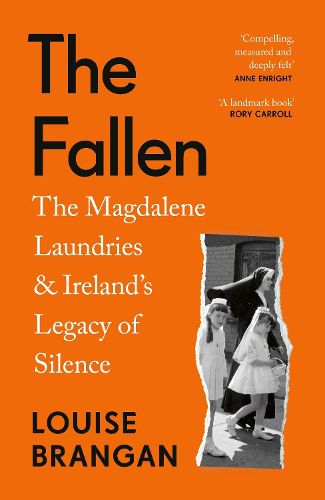
When the gates of the last Laundry shut in 1996, Ireland moved on. Or so it seemed. This remains one of the darkest and most misunderstood periods of recent history. Published to coincide with the thirtieth anniversary of the last Laundry's closure, The Fallen is the forgotten story of the Magdalene Laundries, told through the voices of the women who endured them, the nuns who presided over them and the communities that lived alongside them.
Unflinching and compassionate, Louise Brangan draws on archives and survivors' testimonies to dismantle long-held myths about what the Laundries were, who was sent to these places of violence and secrecy, and why. As we move from the past into the present, Brangan compels us not only to confront this shameful history, but to ask a deeper question- what do we choose to remember?
Winner of the 2024 Royal Society of Literature Giles St Aubyn Award
$9.00 standard shipping within Australia
FREE standard shipping within Australia for orders over $100.00
Express & International shipping calculated at checkout
Stock availability can be subject to change without notice. We recommend calling the shop or contacting our online team to check availability of low stock items. Please see our Shopping Online page for more details.
This haunting and immersive book shines a light on the dark history of Ireland and the Magdalene Laundries
When the gates of the last Magdalene Laundry closed in 1996, Ireland moved on. Or so it seemed.
'Compelling, measured and deeply felt' ANNE ENRIGHT 'A terrific yet harrowing unearthing of Ireland's shadowland. A landmark book' RORY CARROLL 'Breaking silence is a catalyst for change' CAELAINN HOGAN
Following independence in 1922, Ireland began to chase a dream- to become the perfect Catholic nation. But purity had a price. Throughout the twentieth century, thousands of women and girls who did not conform - the wayward, the poor, the disabled, the abused - were sent to the Magdalene Laundries. Each was perceived to have fallen in some way. Once locked inside, their hair was shorn off, their names were erased - and then they were put to work. They washed, they scrubbed and they prayed, labouring in an attempt to salvage their souls.
When the gates of the last Laundry shut in 1996, Ireland moved on. Or so it seemed. This remains one of the darkest and most misunderstood periods of recent history. Published to coincide with the thirtieth anniversary of the last Laundry's closure, The Fallen is the forgotten story of the Magdalene Laundries, told through the voices of the women who endured them, the nuns who presided over them and the communities that lived alongside them.
Unflinching and compassionate, Louise Brangan draws on archives and survivors' testimonies to dismantle long-held myths about what the Laundries were, who was sent to these places of violence and secrecy, and why. As we move from the past into the present, Brangan compels us not only to confront this shameful history, but to ask a deeper question- what do we choose to remember?
Winner of the 2024 Royal Society of Literature Giles St Aubyn Award
Search our extensive online catalogue.
