Readings Newsletter
Become a Readings Member to make your shopping experience even easier.
Sign in or sign up for free!
You’re not far away from qualifying for FREE standard shipping within Australia
You’ve qualified for FREE standard shipping within Australia
The cart is loading…


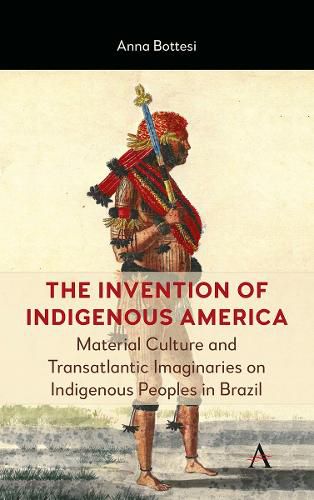
Explores the historical and semantic trajectories of artifacts from two Brazilian Indigenous groups, examining stereotypes and Indigenous communities' views on their heritage.
The book presents recent research on the geographical, historical, and semantic trajectories of some artifacts belonging to two Brazilian Indigenous populations, but kept and exhibited in two ethnographic museums in Vienna and Lisbon. Located within the debate on the rethinking and decolonization of ethnographic collections and museums, its main objective is to investigate the role of material culture in the production of a stereotyped imaginary of the Amazonian Indigenous groups Kambeba and Munduruku. On one hand, it analyzes eighteenth-and nineteenth-century chronicles and illustrations produced by the naturalists who collected the objects in question; on the other hand, it pays attention to the perspectives of contemporary members of the local communities on such processes and on the ways in which their heritage has been and is being treated.
$9.00 standard shipping within Australia
FREE standard shipping within Australia for orders over $100.00
Express & International shipping calculated at checkout
Stock availability can be subject to change without notice. We recommend calling the shop or contacting our online team to check availability of low stock items. Please see our Shopping Online page for more details.
Explores the historical and semantic trajectories of artifacts from two Brazilian Indigenous groups, examining stereotypes and Indigenous communities' views on their heritage.
The book presents recent research on the geographical, historical, and semantic trajectories of some artifacts belonging to two Brazilian Indigenous populations, but kept and exhibited in two ethnographic museums in Vienna and Lisbon. Located within the debate on the rethinking and decolonization of ethnographic collections and museums, its main objective is to investigate the role of material culture in the production of a stereotyped imaginary of the Amazonian Indigenous groups Kambeba and Munduruku. On one hand, it analyzes eighteenth-and nineteenth-century chronicles and illustrations produced by the naturalists who collected the objects in question; on the other hand, it pays attention to the perspectives of contemporary members of the local communities on such processes and on the ways in which their heritage has been and is being treated.
Search our extensive online catalogue.
