Readings Newsletter
Become a Readings Member to make your shopping experience even easier.
Sign in or sign up for free!
You’re not far away from qualifying for FREE standard shipping within Australia
You’ve qualified for FREE standard shipping within Australia
The cart is loading…


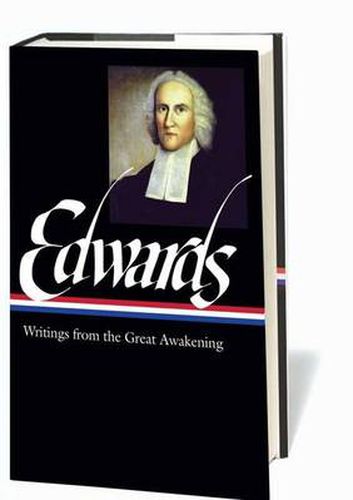
Jonathan Edwards
For five months during the winter and spring of 1734-35 the frontier town of Northampton, Massachusetts, experienced a surge in religious conversions, something that had occurred several times before in its eighty-year history.
What made this revival (now known as ‘the Little
Awakening’) different was the conviction of the town’s young minister that the Holy Spirit was undertaking world-shaking work in the wilds of western New England, and his determination to publicize it in A Faithful Narrative of the Surprising Work of God in the Conversion of Many Hundred Souls, a dramatic account that quickly became an inspiration for evangelicals on both sides of the Atlantic.
Jonathan Edwards (1703-1758) is recognized today as a great theologian and philosopher, ‘one of America’s five or six major artists,’ in the words of the historian Perry Miller, possessed of ‘an intelligence which, as much as Emerson’s, Melville’s, or Mark Twain’s, is both an index of American society and a comment upon it.’
But during his lifetime Edwards was best known as a leader of what is now called the Great Awakening.
Now, in authoritative new texts prepared from first editions and manuscript sources, The Library of America brings together in one volume all of Edwards’s essential writings from and about the Awakening, vivid works whose psychological penetration and spiritual insight still startle with their freshness and force.
The full text of Edwards’s Faithful Narrative, drawn from its first American edition of 1738, is presented here along with The Distinguishing Marks of a Work of the Spirit of God (1741) and Some Thoughts Concerning the Present Revival of Religion in New-England (1743), longer works written as itinerant preachers like George Whitefield spread the tumult of revivalism throughout the British colonies.
Refuting critics who viewed the Awakening as spiritually counterfeit and socially disruptive, Edwards employs an extraordinary fusion of Enlightenment empiricism and orthodox Calvinism to identify and anatomize the subtle workings of the Spirit in the soul.
Rounding out the volume are ‘Justification by Faith Alone’ and ‘Pressing into the Kingdom of God,’ the sermons that Edwards himself thought responsible for the Little Awakening; later sermons - including the stirring Sinners in the Hands of an Angry God, with its harrowing imagery of the wages of sin - that show the range and evolution of Edwards’s preaching style; revealing letters to Whitefield and other evangelical ministers, as well as his famous pastoral letter to Deborah Hatheway, wiidely reprinted in the nineteenth-century as ‘Advice to Young Converts’; and his Personal Narrative, and landmark of eighteenth-century American autobiography that recounts his own conversion experience.
Philip F. Gura is the William S. Newman Distinguished Professor of American Literature and Culture at the University of North Carolina at Chapel Hill.
He is the author of Jonathan Edwards- America’s Evangelical, American Transcendentalism- A History, and Truth’s Ragged Edge- The Rise of the American Novel, among other works, and he serves as an editor for the Norton Anthology of American Literature.
$9.00 standard shipping within Australia
FREE standard shipping within Australia for orders over $100.00
Express & International shipping calculated at checkout
Stock availability can be subject to change without notice. We recommend calling the shop or contacting our online team to check availability of low stock items. Please see our Shopping Online page for more details.
Jonathan Edwards
For five months during the winter and spring of 1734-35 the frontier town of Northampton, Massachusetts, experienced a surge in religious conversions, something that had occurred several times before in its eighty-year history.
What made this revival (now known as ‘the Little
Awakening’) different was the conviction of the town’s young minister that the Holy Spirit was undertaking world-shaking work in the wilds of western New England, and his determination to publicize it in A Faithful Narrative of the Surprising Work of God in the Conversion of Many Hundred Souls, a dramatic account that quickly became an inspiration for evangelicals on both sides of the Atlantic.
Jonathan Edwards (1703-1758) is recognized today as a great theologian and philosopher, ‘one of America’s five or six major artists,’ in the words of the historian Perry Miller, possessed of ‘an intelligence which, as much as Emerson’s, Melville’s, or Mark Twain’s, is both an index of American society and a comment upon it.’
But during his lifetime Edwards was best known as a leader of what is now called the Great Awakening.
Now, in authoritative new texts prepared from first editions and manuscript sources, The Library of America brings together in one volume all of Edwards’s essential writings from and about the Awakening, vivid works whose psychological penetration and spiritual insight still startle with their freshness and force.
The full text of Edwards’s Faithful Narrative, drawn from its first American edition of 1738, is presented here along with The Distinguishing Marks of a Work of the Spirit of God (1741) and Some Thoughts Concerning the Present Revival of Religion in New-England (1743), longer works written as itinerant preachers like George Whitefield spread the tumult of revivalism throughout the British colonies.
Refuting critics who viewed the Awakening as spiritually counterfeit and socially disruptive, Edwards employs an extraordinary fusion of Enlightenment empiricism and orthodox Calvinism to identify and anatomize the subtle workings of the Spirit in the soul.
Rounding out the volume are ‘Justification by Faith Alone’ and ‘Pressing into the Kingdom of God,’ the sermons that Edwards himself thought responsible for the Little Awakening; later sermons - including the stirring Sinners in the Hands of an Angry God, with its harrowing imagery of the wages of sin - that show the range and evolution of Edwards’s preaching style; revealing letters to Whitefield and other evangelical ministers, as well as his famous pastoral letter to Deborah Hatheway, wiidely reprinted in the nineteenth-century as ‘Advice to Young Converts’; and his Personal Narrative, and landmark of eighteenth-century American autobiography that recounts his own conversion experience.
Philip F. Gura is the William S. Newman Distinguished Professor of American Literature and Culture at the University of North Carolina at Chapel Hill.
He is the author of Jonathan Edwards- America’s Evangelical, American Transcendentalism- A History, and Truth’s Ragged Edge- The Rise of the American Novel, among other works, and he serves as an editor for the Norton Anthology of American Literature.
Search our extensive online catalogue.
