Readings Newsletter
Become a Readings Member to make your shopping experience even easier.
Sign in or sign up for free!
You’re not far away from qualifying for FREE standard shipping within Australia
You’ve qualified for FREE standard shipping within Australia
The cart is loading…


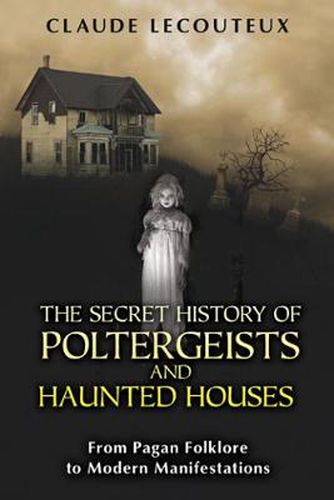
What poltergeist accounts through the ages reveal about our own worldviews
* Provides a wide array of case studies from ancient Greece and Rome to medieval Europe to the modern world
* Explores the relationship between poltergeists and troubled adolescence
* Looks beneath the Christian adulteration of pagan practices to reveal the hidden ancestral beliefs tied to poltergeists and haunted houses
Stories of poltergeists and their mischievous and sometimes violent actions–knocking, stone or chair throwing, moving objects with invisible hands, and slamming or opening doors–are a constant through the ages. What changes is how we interpret this activity. For our pagan ancestors this phenomenon was caused by helper spirits whose manifestations revealed their unhappiness with a household. The medieval Christian church demonized these once helpful spirits and held exorcisms to expel them from the houses they haunted–which proved effective less than half the time. The Age of Enlightenment cast these incidents as clever hoaxes, and many still believe this today. But poltergeist manifestations continue to appear and often defy attempts to debunk them as pranks. What then is behind this phenomenon?
Exploring accounts of poltergeists from ancient Greece and Rome, medieval Europe, and the modern world, Claude Lecouteux finds that while our interpretations of poltergeists may change, the manifestations always follow a similar course and evolution. He shows how modern scientific studies of poltergeist manifestations have found a strong tie between these visitations and the presence of a troubled adolescent in the house. Looking beneath the Christian adulteration of pagan practices to reveal the hidden ancestral beliefs tied to poltergeists and haunted houses, the author shows how these unhappy spirits serve as confirmation of the supernatural beings that share the earth with us and of our relationship with the natural and unseen world, a relationship we must take care to keep in balance.
$9.00 standard shipping within Australia
FREE standard shipping within Australia for orders over $100.00
Express & International shipping calculated at checkout
Stock availability can be subject to change without notice. We recommend calling the shop or contacting our online team to check availability of low stock items. Please see our Shopping Online page for more details.
What poltergeist accounts through the ages reveal about our own worldviews
* Provides a wide array of case studies from ancient Greece and Rome to medieval Europe to the modern world
* Explores the relationship between poltergeists and troubled adolescence
* Looks beneath the Christian adulteration of pagan practices to reveal the hidden ancestral beliefs tied to poltergeists and haunted houses
Stories of poltergeists and their mischievous and sometimes violent actions–knocking, stone or chair throwing, moving objects with invisible hands, and slamming or opening doors–are a constant through the ages. What changes is how we interpret this activity. For our pagan ancestors this phenomenon was caused by helper spirits whose manifestations revealed their unhappiness with a household. The medieval Christian church demonized these once helpful spirits and held exorcisms to expel them from the houses they haunted–which proved effective less than half the time. The Age of Enlightenment cast these incidents as clever hoaxes, and many still believe this today. But poltergeist manifestations continue to appear and often defy attempts to debunk them as pranks. What then is behind this phenomenon?
Exploring accounts of poltergeists from ancient Greece and Rome, medieval Europe, and the modern world, Claude Lecouteux finds that while our interpretations of poltergeists may change, the manifestations always follow a similar course and evolution. He shows how modern scientific studies of poltergeist manifestations have found a strong tie between these visitations and the presence of a troubled adolescent in the house. Looking beneath the Christian adulteration of pagan practices to reveal the hidden ancestral beliefs tied to poltergeists and haunted houses, the author shows how these unhappy spirits serve as confirmation of the supernatural beings that share the earth with us and of our relationship with the natural and unseen world, a relationship we must take care to keep in balance.
Search our extensive online catalogue.
