Readings Newsletter
Become a Readings Member to make your shopping experience even easier.
Sign in or sign up for free!
You’re not far away from qualifying for FREE standard shipping within Australia
You’ve qualified for FREE standard shipping within Australia
The cart is loading…


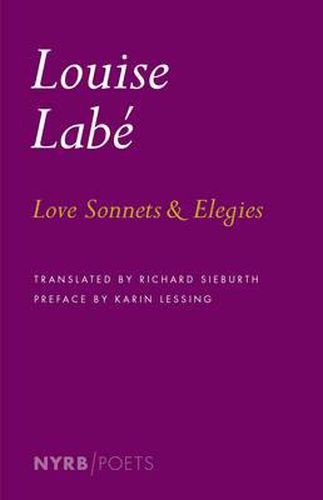
Louise Labe is commonly regarded as the most original woman poet of the French Renaissance. The daughter of an illiterate rope maker in Lyon, known to her contemporaries for her unusual learning as well as her skills as a singer and lutanist, Labe was in her thirties when she published her complete Works in 1555 and then disappeared from the scene, not to be rediscovered until the nineteenth century. Her love poetry, made famous by Rilke’s German versions, is published here with the originals en face and newly rendered into English by award-winning translator Richard Sieburth, who also includes a biographical chronology of the poet, notes, and an informative afterword to this edition. These Love Sonnets and Elegies confirm Labe’s reputation as the first modern Sappho.
$9.00 standard shipping within Australia
FREE standard shipping within Australia for orders over $100.00
Express & International shipping calculated at checkout
Stock availability can be subject to change without notice. We recommend calling the shop or contacting our online team to check availability of low stock items. Please see our Shopping Online page for more details.
Louise Labe is commonly regarded as the most original woman poet of the French Renaissance. The daughter of an illiterate rope maker in Lyon, known to her contemporaries for her unusual learning as well as her skills as a singer and lutanist, Labe was in her thirties when she published her complete Works in 1555 and then disappeared from the scene, not to be rediscovered until the nineteenth century. Her love poetry, made famous by Rilke’s German versions, is published here with the originals en face and newly rendered into English by award-winning translator Richard Sieburth, who also includes a biographical chronology of the poet, notes, and an informative afterword to this edition. These Love Sonnets and Elegies confirm Labe’s reputation as the first modern Sappho.
Search our extensive online catalogue.
