Readings Newsletter
Become a Readings Member to make your shopping experience even easier.
Sign in or sign up for free!
You’re not far away from qualifying for FREE standard shipping within Australia
You’ve qualified for FREE standard shipping within Australia
The cart is loading…


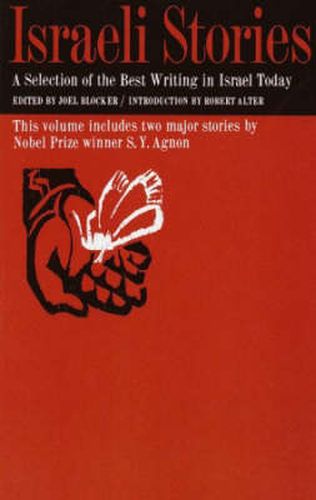
A selection of the Best Writing in Israel Today
Edited by Joel Blocker, introduction by Robert Alter
The present volume of Israeli stories reassuringly illustrates the other half of a frequently asserted half-truth. Modern Hebrew literature, it is claimed, liked Yiddish literature, does not really share the large concerns of serious literary activity in the West. The Hebrew writer ordinarily does not address himself to the human situation with all of its far-reaching possibilities of tragedy of comedy, but to the Jewish situation, which is quite another thing. Consequently, Hebrew and Yiddish writers-so goes the claim-develop a system of typology rather than methods of characterization, for they are most essentially interested in the Jewish people, its particular qualities and its present fate or ultimate destiny, while the individual, who is central in other modern literatures, stands at the periphery of their vision.
$9.00 standard shipping within Australia
FREE standard shipping within Australia for orders over $100.00
Express & International shipping calculated at checkout
Stock availability can be subject to change without notice. We recommend calling the shop or contacting our online team to check availability of low stock items. Please see our Shopping Online page for more details.
A selection of the Best Writing in Israel Today
Edited by Joel Blocker, introduction by Robert Alter
The present volume of Israeli stories reassuringly illustrates the other half of a frequently asserted half-truth. Modern Hebrew literature, it is claimed, liked Yiddish literature, does not really share the large concerns of serious literary activity in the West. The Hebrew writer ordinarily does not address himself to the human situation with all of its far-reaching possibilities of tragedy of comedy, but to the Jewish situation, which is quite another thing. Consequently, Hebrew and Yiddish writers-so goes the claim-develop a system of typology rather than methods of characterization, for they are most essentially interested in the Jewish people, its particular qualities and its present fate or ultimate destiny, while the individual, who is central in other modern literatures, stands at the periphery of their vision.
Search our extensive online catalogue.
