Readings Newsletter
Become a Readings Member to make your shopping experience even easier.
Sign in or sign up for free!
You’re not far away from qualifying for FREE standard shipping within Australia
You’ve qualified for FREE standard shipping within Australia
The cart is loading…


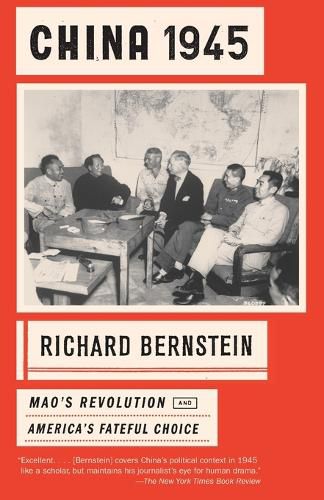
As 1945 opened, America was on surprisingly congenial terms with Mao and his Communist rebels. But by year’s end Communist diplomacy had all but frozen and America was resigned to unqualified support for China’s Allied leader, General Chiang Kai-Shek, despite growing certainty that Mao was China’s heir apparent–resulting in a political allegiance whose consequences would echo down the subsequent decades, most violently in the form of the Korean and Vietnam wars. What happened? Richard Bernstein brilliantly analyzes the many components of that year’s sea change, from ideological infighting among U.S. diplomats, military leaders, and opinion makers, to Mao’s opportunistic presentations of identity and ambition, to China’s status as the crucible of a new world order, in which Soviet influence and intention were increasingly clearly manifest. Bernstein challenges familiar assumptions about the origins of modern Sino-American paradigms and meaningfully considers whether things could have turned out differently.
$9.00 standard shipping within Australia
FREE standard shipping within Australia for orders over $100.00
Express & International shipping calculated at checkout
Stock availability can be subject to change without notice. We recommend calling the shop or contacting our online team to check availability of low stock items. Please see our Shopping Online page for more details.
As 1945 opened, America was on surprisingly congenial terms with Mao and his Communist rebels. But by year’s end Communist diplomacy had all but frozen and America was resigned to unqualified support for China’s Allied leader, General Chiang Kai-Shek, despite growing certainty that Mao was China’s heir apparent–resulting in a political allegiance whose consequences would echo down the subsequent decades, most violently in the form of the Korean and Vietnam wars. What happened? Richard Bernstein brilliantly analyzes the many components of that year’s sea change, from ideological infighting among U.S. diplomats, military leaders, and opinion makers, to Mao’s opportunistic presentations of identity and ambition, to China’s status as the crucible of a new world order, in which Soviet influence and intention were increasingly clearly manifest. Bernstein challenges familiar assumptions about the origins of modern Sino-American paradigms and meaningfully considers whether things could have turned out differently.
Search our extensive online catalogue.
