Readings Newsletter
Become a Readings Member to make your shopping experience even easier.
Sign in or sign up for free!
You’re not far away from qualifying for FREE standard shipping within Australia
You’ve qualified for FREE standard shipping within Australia
The cart is loading…


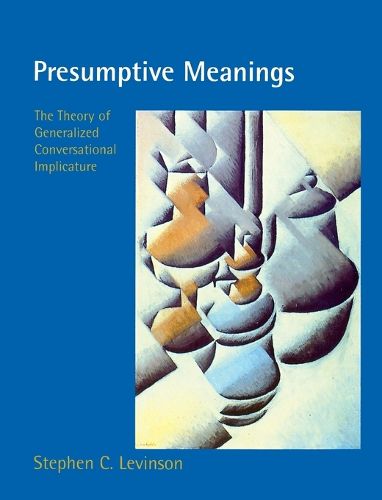
When we speak, we mean more than we say. In this book Stephen C. Levinson explains some general processes that underlie presumptions in communication. This is the first extended discussion of preferred interpretation in language understanding, integrating much of the best research in linguistic pragmatics from the last two decades. Levinson outlines a theory of presumptive meanings, or preferred interpretations, governing the use of language, building on the idea of implicature developed by the philosopher H.P. Grice. Some of the indirect information carried by speech is presumed by default because it is carried by general principles, rather than inferred from specific assumptions about intention and context. Levinson examines this class of general pragmatic inferences in detail, showing how they apply to a wide range of linguistic constructions. This approach has radical consequences for how we think about langauge and communication.
$9.00 standard shipping within Australia
FREE standard shipping within Australia for orders over $100.00
Express & International shipping calculated at checkout
Stock availability can be subject to change without notice. We recommend calling the shop or contacting our online team to check availability of low stock items. Please see our Shopping Online page for more details.
When we speak, we mean more than we say. In this book Stephen C. Levinson explains some general processes that underlie presumptions in communication. This is the first extended discussion of preferred interpretation in language understanding, integrating much of the best research in linguistic pragmatics from the last two decades. Levinson outlines a theory of presumptive meanings, or preferred interpretations, governing the use of language, building on the idea of implicature developed by the philosopher H.P. Grice. Some of the indirect information carried by speech is presumed by default because it is carried by general principles, rather than inferred from specific assumptions about intention and context. Levinson examines this class of general pragmatic inferences in detail, showing how they apply to a wide range of linguistic constructions. This approach has radical consequences for how we think about langauge and communication.
Search our extensive online catalogue.
