Readings Newsletter
Become a Readings Member to make your shopping experience even easier.
Sign in or sign up for free!
You’re not far away from qualifying for FREE standard shipping within Australia
You’ve qualified for FREE standard shipping within Australia
The cart is loading…


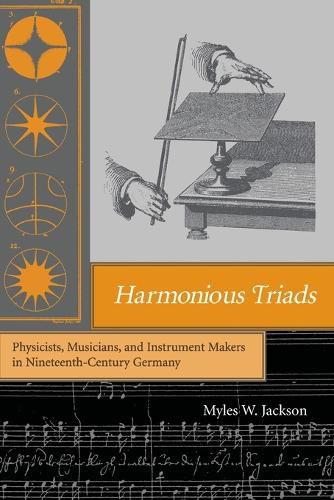
Historically, music was long classified as both art and science. Aspects of music - from the mathematics of tuning to the music of the celestial spheres - were primarily studied as science until the seventeenth century. In the nineteenth century, although scientists were less interested in the music of the spheres than were the natural philosophers of earlier centuries, they remained committed to understanding the world of performing musicians and their instruments. In Harmonious Triads , Myles Jackson analyzes the relationship of physicists, musicians, and instrument makers in nineteenth-century Germany. Musical instruments provided physicists with experimental systems, and physicists’ research led directly to improvements in musical-instrument manufacture and assisted musicians in their performances. Music also provided scientists with a cultural resource, which forged acquaintances and future collaborations.Jackson’s historical consideration of questions at the intersection of music and physics shows us how each discipline helped shape the other.
$9.00 standard shipping within Australia
FREE standard shipping within Australia for orders over $100.00
Express & International shipping calculated at checkout
Stock availability can be subject to change without notice. We recommend calling the shop or contacting our online team to check availability of low stock items. Please see our Shopping Online page for more details.
Historically, music was long classified as both art and science. Aspects of music - from the mathematics of tuning to the music of the celestial spheres - were primarily studied as science until the seventeenth century. In the nineteenth century, although scientists were less interested in the music of the spheres than were the natural philosophers of earlier centuries, they remained committed to understanding the world of performing musicians and their instruments. In Harmonious Triads , Myles Jackson analyzes the relationship of physicists, musicians, and instrument makers in nineteenth-century Germany. Musical instruments provided physicists with experimental systems, and physicists’ research led directly to improvements in musical-instrument manufacture and assisted musicians in their performances. Music also provided scientists with a cultural resource, which forged acquaintances and future collaborations.Jackson’s historical consideration of questions at the intersection of music and physics shows us how each discipline helped shape the other.
Search our extensive online catalogue.
