Readings Newsletter
Become a Readings Member to make your shopping experience even easier.
Sign in or sign up for free!
You’re not far away from qualifying for FREE standard shipping within Australia
You’ve qualified for FREE standard shipping within Australia
The cart is loading…


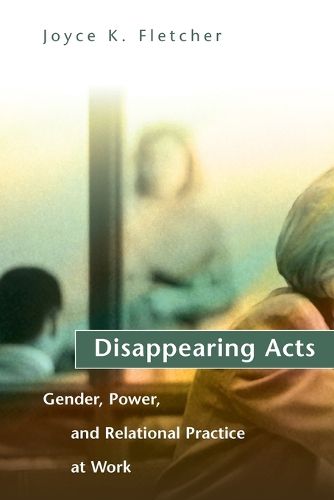
With its move from hierarchical to team-based structures and its dismantling of functional barriers, the organization of the future is touted as a radical departure from traditional models. The worker of the future, we are told, must be a collaborative team player, able to give and receive help, empower others, and operate in a world of interdependence. This new worker needs relational skills and emotional intelligence - the ability to work effectively with others and understand the emotional context in which work takes place. Paradoxically, the very skills that give organizations a competitive advantage may be precisely those that prevent individual employees - especially women - from advancing. In this book Joyce K. Fletcher presents a study of female design engineers that has profound implications for attempts to change organizational culture, her research shows that emotional intelligence and relational behaviour often get disappeared in practice, not because they are ineffective but because they are associated with the feminine or softer side of work. Even when they are in line with stated goals, these behaviours are viewed as inappropriate to the workplace because they collide with powerful, gender-linked images of good workers and successful organizations. Fletcher describes how this collision of gender and power disappears the very behaviour that organizations say they need and undermines the possibility of radical change. She shows why the female advantage does not seem to be advantaging females or organizations. Finally, she suggests ways that individuals and organizations can make visible the invisible work - and people -critical to organizational competence and transformation.
$9.00 standard shipping within Australia
FREE standard shipping within Australia for orders over $100.00
Express & International shipping calculated at checkout
Stock availability can be subject to change without notice. We recommend calling the shop or contacting our online team to check availability of low stock items. Please see our Shopping Online page for more details.
With its move from hierarchical to team-based structures and its dismantling of functional barriers, the organization of the future is touted as a radical departure from traditional models. The worker of the future, we are told, must be a collaborative team player, able to give and receive help, empower others, and operate in a world of interdependence. This new worker needs relational skills and emotional intelligence - the ability to work effectively with others and understand the emotional context in which work takes place. Paradoxically, the very skills that give organizations a competitive advantage may be precisely those that prevent individual employees - especially women - from advancing. In this book Joyce K. Fletcher presents a study of female design engineers that has profound implications for attempts to change organizational culture, her research shows that emotional intelligence and relational behaviour often get disappeared in practice, not because they are ineffective but because they are associated with the feminine or softer side of work. Even when they are in line with stated goals, these behaviours are viewed as inappropriate to the workplace because they collide with powerful, gender-linked images of good workers and successful organizations. Fletcher describes how this collision of gender and power disappears the very behaviour that organizations say they need and undermines the possibility of radical change. She shows why the female advantage does not seem to be advantaging females or organizations. Finally, she suggests ways that individuals and organizations can make visible the invisible work - and people -critical to organizational competence and transformation.
Search our extensive online catalogue.
