Readings Newsletter
Become a Readings Member to make your shopping experience even easier.
Sign in or sign up for free!
You’re not far away from qualifying for FREE standard shipping within Australia
You’ve qualified for FREE standard shipping within Australia
The cart is loading…


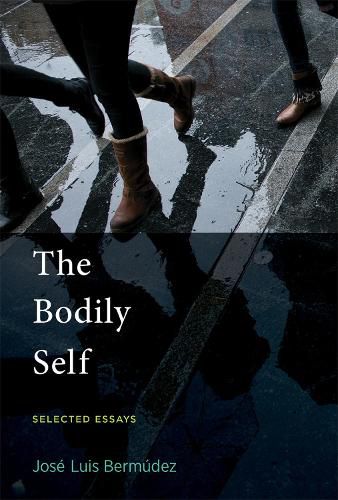
Essays on the role of the body in self-consciousness, showing that full-fledged, linguistic self-consciousness is built on a rich foundation of primitive, nonconceptual self-consciousness.
Essays on the role of the body in self-consciousness, showing that full-fledged, linguistic self-consciousness is built on a rich foundation of primitive, nonconceptual self-consciousness.
These essays explore how the rich and sophisticated forms of self-consciousness with which we are most familiar-as philosophers, psychologists, and as ordinary, reflective individuals-depend on a complex underpinning that has been largely invisible to students of the self and self-consciousness. Jose Luis Bermodez, extending the insights of his groundbreaking 1998 book, The Paradox of Self-Consciousness, argues that full-fledged, linguistic self-consciousness is built on a rich foundation of primitive, nonconceptual self-consciousness, and that these more primitive forms of self-consciousness persist in ways that frame self-conscious thought. They extend throughout the animal kingdom, and some are present in newborn human infants.
Bermodez makes the case that these primitive forms of self-awareness can indeed be described as forms of self-consciousness, arguing that they share certain structural and epistemological features with full-fledged, linguistic self-consciousness. He offers accounts of certain important classes of states of nonconceptual content, including the self-specifying dimension of visual perception and the content of bodily awareness, considering how they represent the self. And he explores the general role of nonconceptual self-consciousness in our cognitive and affective lives, examining in several essays the relation between nonconceptual awareness of our bodies and what has been called our "sense of ownership" for our own bodies.
$9.00 standard shipping within Australia
FREE standard shipping within Australia for orders over $100.00
Express & International shipping calculated at checkout
Stock availability can be subject to change without notice. We recommend calling the shop or contacting our online team to check availability of low stock items. Please see our Shopping Online page for more details.
Essays on the role of the body in self-consciousness, showing that full-fledged, linguistic self-consciousness is built on a rich foundation of primitive, nonconceptual self-consciousness.
Essays on the role of the body in self-consciousness, showing that full-fledged, linguistic self-consciousness is built on a rich foundation of primitive, nonconceptual self-consciousness.
These essays explore how the rich and sophisticated forms of self-consciousness with which we are most familiar-as philosophers, psychologists, and as ordinary, reflective individuals-depend on a complex underpinning that has been largely invisible to students of the self and self-consciousness. Jose Luis Bermodez, extending the insights of his groundbreaking 1998 book, The Paradox of Self-Consciousness, argues that full-fledged, linguistic self-consciousness is built on a rich foundation of primitive, nonconceptual self-consciousness, and that these more primitive forms of self-consciousness persist in ways that frame self-conscious thought. They extend throughout the animal kingdom, and some are present in newborn human infants.
Bermodez makes the case that these primitive forms of self-awareness can indeed be described as forms of self-consciousness, arguing that they share certain structural and epistemological features with full-fledged, linguistic self-consciousness. He offers accounts of certain important classes of states of nonconceptual content, including the self-specifying dimension of visual perception and the content of bodily awareness, considering how they represent the self. And he explores the general role of nonconceptual self-consciousness in our cognitive and affective lives, examining in several essays the relation between nonconceptual awareness of our bodies and what has been called our "sense of ownership" for our own bodies.
Search our extensive online catalogue.
