Readings Newsletter
Become a Readings Member to make your shopping experience even easier.
Sign in or sign up for free!
You’re not far away from qualifying for FREE standard shipping within Australia
You’ve qualified for FREE standard shipping within Australia
The cart is loading…


A comprehensive proposal for a conceptual framework for describing conscious experience in dreams, integrating philosophy of mind, sleep and dream research, and interdisciplinary consciousness studies.
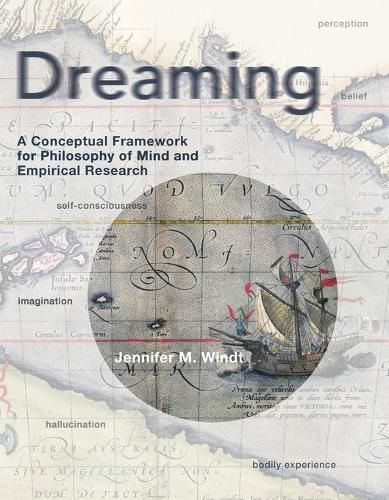
Dreams, conceived as conscious experience or phenomenal states during sleep, offer an important contrast condition for theories of consciousness and the self. Yet, although there is a wealth of empirical research on sleep and dreaming, its potential contribution to consciousness research and philosophy of mind is largely overlooked. This might be due, in part, to a lack of conceptual clarity and an underlying disagreement about the nature of the phenomenon of dreaming itself. In Dreaming, Jennifer Windt lays the groundwork for solving this problem. She develops a conceptual framework describing not only what it means to say that dreams are conscious experiences but also how to locate dreams relative to such concepts as perception, hallucination, and imagination, as well as thinking, knowledge, belief, deception, and self-consciousness.
Arguing that a conceptual framework must be not only conceptually sound but also phenomenologically plausible and carefully informed by neuroscientific research, Windt integrates her review of philosophical work on dreaming, both historical and contemporary, with a survey of the most important empirical findings. This allows her to work toward a systematic and comprehensive new theoretical understanding of dreaming informed by a critical reading of contemporary research findings. Windt's account demonstrates that a philosophical analysis of the concept of dreaming can provide an important enrichment and extension to the conceptual repertoire of discussions of consciousness and the self and raises new questions for future research.
$9.00 standard shipping within Australia
FREE standard shipping within Australia for orders over $100.00
Express & International shipping calculated at checkout
Stock availability can be subject to change without notice. We recommend calling the shop or contacting our online team to check availability of low stock items. Please see our Shopping Online page for more details.
A comprehensive proposal for a conceptual framework for describing conscious experience in dreams, integrating philosophy of mind, sleep and dream research, and interdisciplinary consciousness studies.
Dreams, conceived as conscious experience or phenomenal states during sleep, offer an important contrast condition for theories of consciousness and the self. Yet, although there is a wealth of empirical research on sleep and dreaming, its potential contribution to consciousness research and philosophy of mind is largely overlooked. This might be due, in part, to a lack of conceptual clarity and an underlying disagreement about the nature of the phenomenon of dreaming itself. In Dreaming, Jennifer Windt lays the groundwork for solving this problem. She develops a conceptual framework describing not only what it means to say that dreams are conscious experiences but also how to locate dreams relative to such concepts as perception, hallucination, and imagination, as well as thinking, knowledge, belief, deception, and self-consciousness.
Arguing that a conceptual framework must be not only conceptually sound but also phenomenologically plausible and carefully informed by neuroscientific research, Windt integrates her review of philosophical work on dreaming, both historical and contemporary, with a survey of the most important empirical findings. This allows her to work toward a systematic and comprehensive new theoretical understanding of dreaming informed by a critical reading of contemporary research findings. Windt's account demonstrates that a philosophical analysis of the concept of dreaming can provide an important enrichment and extension to the conceptual repertoire of discussions of consciousness and the self and raises new questions for future research.
Search our extensive online catalogue.
