Readings Newsletter
Become a Readings Member to make your shopping experience even easier.
Sign in or sign up for free!
You’re not far away from qualifying for FREE standard shipping within Australia
You’ve qualified for FREE standard shipping within Australia
The cart is loading…


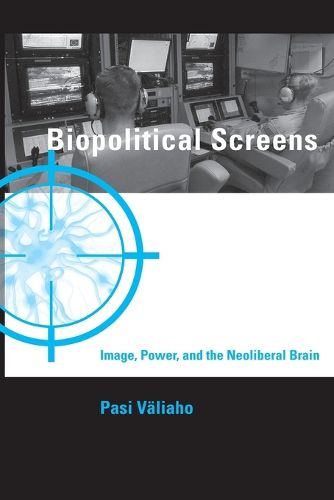
An investigation of the aesthetics and politics of new visual media under twenty-first-century capitalism, from console games to virtual reality to video installation art.
An investigation of the aesthetics and politics of new visual media under twenty-first-century capitalism, from console games to virtual reality to video installation art.
In Biopolitical Screens, Pasi V liaho charts and conceptualizes the imagery that composes our affective and conceptual reality under twenty-first-century capitalism. V liaho investigates the role screen media play in the networks that today harness human minds and bodies-the ways that images animated on console game platforms, virtual reality technologies, and computer screens capture human potential by plugging it into arrangements of finance, war, and the consumption of entertainment. Drawing on current neuroscience and political and economic thought, V liaho argues that these images work to shape the atomistic individuals who populate the neoliberal world of accumulation and war.
V liaho bases his argument on a broad notion of the image as something both visible and sayable, detectable in various screen platforms but also in scientific perception and theoretical ideas. After laying out the conceptual foundations of the book, V liaho offers focused and detailed investigations of the current visual economy. He considers the imagery of first-person shooter video games as tools of "neuropower"; explores the design and construction of virtual reality technologies to treat post-traumatic stress disorder in veterans of Iraq and Afghanistan; and examines three instances of video installation art that have the power to disrupt the dominant regime of sensibility rather than reinforce it.
$9.00 standard shipping within Australia
FREE standard shipping within Australia for orders over $100.00
Express & International shipping calculated at checkout
Stock availability can be subject to change without notice. We recommend calling the shop or contacting our online team to check availability of low stock items. Please see our Shopping Online page for more details.
An investigation of the aesthetics and politics of new visual media under twenty-first-century capitalism, from console games to virtual reality to video installation art.
An investigation of the aesthetics and politics of new visual media under twenty-first-century capitalism, from console games to virtual reality to video installation art.
In Biopolitical Screens, Pasi V liaho charts and conceptualizes the imagery that composes our affective and conceptual reality under twenty-first-century capitalism. V liaho investigates the role screen media play in the networks that today harness human minds and bodies-the ways that images animated on console game platforms, virtual reality technologies, and computer screens capture human potential by plugging it into arrangements of finance, war, and the consumption of entertainment. Drawing on current neuroscience and political and economic thought, V liaho argues that these images work to shape the atomistic individuals who populate the neoliberal world of accumulation and war.
V liaho bases his argument on a broad notion of the image as something both visible and sayable, detectable in various screen platforms but also in scientific perception and theoretical ideas. After laying out the conceptual foundations of the book, V liaho offers focused and detailed investigations of the current visual economy. He considers the imagery of first-person shooter video games as tools of "neuropower"; explores the design and construction of virtual reality technologies to treat post-traumatic stress disorder in veterans of Iraq and Afghanistan; and examines three instances of video installation art that have the power to disrupt the dominant regime of sensibility rather than reinforce it.
Search our extensive online catalogue.
