Readings Newsletter
Become a Readings Member to make your shopping experience even easier.
Sign in or sign up for free!
You’re not far away from qualifying for FREE standard shipping within Australia
You’ve qualified for FREE standard shipping within Australia
The cart is loading…


The biography of a multifaceted technological object, the IUD, illuminates how political contexts shaped contraceptive development, marketing, use, and users.
The biography of a multifaceted technological object, the IUD, illuminates how political contexts shaped contraceptive development, marketing, use, and users.
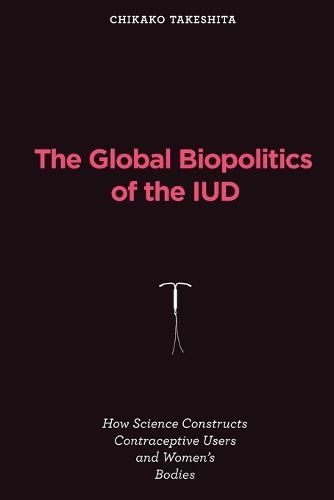
The intrauterine device (IUD) is used by 150 million women around the world. It is the second most prevalent method of female fertility control in the global South and the third most prevalent in the global North. Over its five decades of use, the IUD has been viewed both as a means for women's reproductive autonomy and as coercive tool of state-imposed population control, as a convenient form of birth control on a par with the pill and as a threat to women's health. In this book, Chikako Takeshita investigates the development, marketing, and use of the IUD since the 1960s. She offers a biography of a multifaceted technological object through a feminist science studies lens, tracing the transformations of the scientific discourse around it over time and across different geographies.
Takeshita describes how developers of the IUD adapted to different social interests in their research and how changing assumptions about race, class, and female sexuality often guided scientific inquiries. The IUD, she argues, became a "politically versatile technology," adaptable to both feminist and nonfeminist reproductive politics because of researchers' attempts to maintain the device's suitability for women in both the developing and the developed world. Takeshita traces the evolution of scientists' concerns-from contraceptive efficacy and product safety to the politics of abortion-and describes the most recent, hormone-releasing, menstruation-suppressing iteration of the IUD. Examining fifty years of IUD development and use, Takeshita finds a microcosm of the global political economy of women's bodies, health, and sexuality in the history of this contraceptive device.
$9.00 standard shipping within Australia
FREE standard shipping within Australia for orders over $100.00
Express & International shipping calculated at checkout
Stock availability can be subject to change without notice. We recommend calling the shop or contacting our online team to check availability of low stock items. Please see our Shopping Online page for more details.
The biography of a multifaceted technological object, the IUD, illuminates how political contexts shaped contraceptive development, marketing, use, and users.
The biography of a multifaceted technological object, the IUD, illuminates how political contexts shaped contraceptive development, marketing, use, and users.
The intrauterine device (IUD) is used by 150 million women around the world. It is the second most prevalent method of female fertility control in the global South and the third most prevalent in the global North. Over its five decades of use, the IUD has been viewed both as a means for women's reproductive autonomy and as coercive tool of state-imposed population control, as a convenient form of birth control on a par with the pill and as a threat to women's health. In this book, Chikako Takeshita investigates the development, marketing, and use of the IUD since the 1960s. She offers a biography of a multifaceted technological object through a feminist science studies lens, tracing the transformations of the scientific discourse around it over time and across different geographies.
Takeshita describes how developers of the IUD adapted to different social interests in their research and how changing assumptions about race, class, and female sexuality often guided scientific inquiries. The IUD, she argues, became a "politically versatile technology," adaptable to both feminist and nonfeminist reproductive politics because of researchers' attempts to maintain the device's suitability for women in both the developing and the developed world. Takeshita traces the evolution of scientists' concerns-from contraceptive efficacy and product safety to the politics of abortion-and describes the most recent, hormone-releasing, menstruation-suppressing iteration of the IUD. Examining fifty years of IUD development and use, Takeshita finds a microcosm of the global political economy of women's bodies, health, and sexuality in the history of this contraceptive device.
Search our extensive online catalogue.
