Readings Newsletter
Become a Readings Member to make your shopping experience even easier.
Sign in or sign up for free!
You’re not far away from qualifying for FREE standard shipping within Australia
You’ve qualified for FREE standard shipping within Australia
The cart is loading…


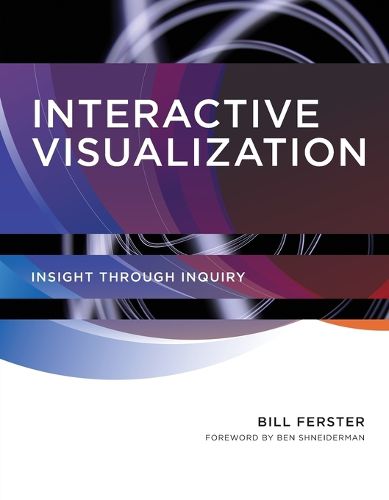
A guide to fundamental issues in designing interactive visualizations, exploring ideas of inquiry, design, structured data, and usability.
A guide to fundamental issues in designing interactive visualizations, exploring ideas of inquiry, design, structured data, and usability.
Interactive visualization is emerging as a vibrant new form of communication, providing compelling presentations that allow viewers to interact directly with information in order to construct their own understandings of it. Building on a long tradition of print-based information visualization, interactive visualization utilizes the technological capabilities of computers, the Internet, and computer graphics to marshal multifaceted information in the service of making a point visually. This book offers an introduction to the field, presenting a framework for exploring historical, theoretical, and practical issues. It is not a "how-to" book tied to specific and soon-to-be-outdated software tools, but a guide to the concepts that are central to building interactive visualization projects whatever their ultimate form.
The framework the book presents (known as the ASSERT model, developed by the author), allows the reader to explore the process of interactive visualization in terms of choosing good questions to ask; finding appropriate data for answering them; structuring that information; exploring and analyzing the data; representing the data visually; and telling a story using the data. Interactive visualization draws on many disciplines to inform the final representation, and the book reflects this, covering basic principles of inquiry, data structuring, information design, statistics, cognitive theory, usability, working with spreadsheets, the Internet, and storytelling.
$9.00 standard shipping within Australia
FREE standard shipping within Australia for orders over $100.00
Express & International shipping calculated at checkout
Stock availability can be subject to change without notice. We recommend calling the shop or contacting our online team to check availability of low stock items. Please see our Shopping Online page for more details.
A guide to fundamental issues in designing interactive visualizations, exploring ideas of inquiry, design, structured data, and usability.
A guide to fundamental issues in designing interactive visualizations, exploring ideas of inquiry, design, structured data, and usability.
Interactive visualization is emerging as a vibrant new form of communication, providing compelling presentations that allow viewers to interact directly with information in order to construct their own understandings of it. Building on a long tradition of print-based information visualization, interactive visualization utilizes the technological capabilities of computers, the Internet, and computer graphics to marshal multifaceted information in the service of making a point visually. This book offers an introduction to the field, presenting a framework for exploring historical, theoretical, and practical issues. It is not a "how-to" book tied to specific and soon-to-be-outdated software tools, but a guide to the concepts that are central to building interactive visualization projects whatever their ultimate form.
The framework the book presents (known as the ASSERT model, developed by the author), allows the reader to explore the process of interactive visualization in terms of choosing good questions to ask; finding appropriate data for answering them; structuring that information; exploring and analyzing the data; representing the data visually; and telling a story using the data. Interactive visualization draws on many disciplines to inform the final representation, and the book reflects this, covering basic principles of inquiry, data structuring, information design, statistics, cognitive theory, usability, working with spreadsheets, the Internet, and storytelling.
Search our extensive online catalogue.
