Readings Newsletter
Become a Readings Member to make your shopping experience even easier.
Sign in or sign up for free!
You’re not far away from qualifying for FREE standard shipping within Australia
You’ve qualified for FREE standard shipping within Australia
The cart is loading…


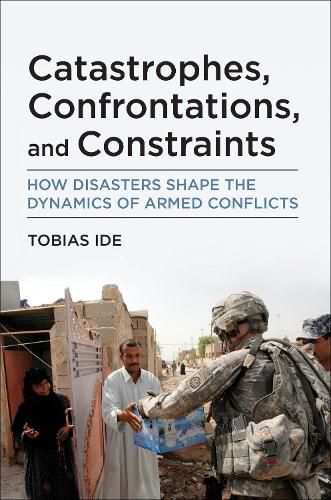
A ground-breaking study on how natural disasters can escalate or defuse wars, insurgencies, and other strife.
Armed conflict and disasters are two key challenges of the twenty-first century. The number of armed conflicts has never been higher since the end of World War II. At the same time, disasters have increased in frequency and intensity over the past two decades due to climate change, urbanization, and persistent inequalities. Providing the first comprehensive analysis of the interplay of natural disasters and armed conflict, this book offers an incisive analysis that explains whether, how, and in which contexts disasters facilitate the escalation or de-escalation of armed conflicts-as well as whether, how, and in which contexts combatants exploit or fail to exploit these catastrophes.
Tobias Ide begins by laying out a comprehensive framework that explains the link between disasters and the (de-)escalation of armed conflict. From there, he presents 36 case studies of earthquakes, droughts, floods and storms in Africa, the Middle East, Asia and Latin America. He also covers the implications of COVID-19 on armed conflicts in Iraq, Afghanistan, Nigeria, and the Philippines. Finally, he combines qualitative insights with quantitative data in a unique multi-method design to analyze when disasters facilitate the intensification or de-escalation of civil wars.
Catastrophes, Confrontations, and Constraints adds a wealth of invaluable evidence to current debates on climate change, environmental stress, and security, while providing professionals and students with timely data for their own investigations.
$9.00 standard shipping within Australia
FREE standard shipping within Australia for orders over $100.00
Express & International shipping calculated at checkout
Stock availability can be subject to change without notice. We recommend calling the shop or contacting our online team to check availability of low stock items. Please see our Shopping Online page for more details.
A ground-breaking study on how natural disasters can escalate or defuse wars, insurgencies, and other strife.
Armed conflict and disasters are two key challenges of the twenty-first century. The number of armed conflicts has never been higher since the end of World War II. At the same time, disasters have increased in frequency and intensity over the past two decades due to climate change, urbanization, and persistent inequalities. Providing the first comprehensive analysis of the interplay of natural disasters and armed conflict, this book offers an incisive analysis that explains whether, how, and in which contexts disasters facilitate the escalation or de-escalation of armed conflicts-as well as whether, how, and in which contexts combatants exploit or fail to exploit these catastrophes.
Tobias Ide begins by laying out a comprehensive framework that explains the link between disasters and the (de-)escalation of armed conflict. From there, he presents 36 case studies of earthquakes, droughts, floods and storms in Africa, the Middle East, Asia and Latin America. He also covers the implications of COVID-19 on armed conflicts in Iraq, Afghanistan, Nigeria, and the Philippines. Finally, he combines qualitative insights with quantitative data in a unique multi-method design to analyze when disasters facilitate the intensification or de-escalation of civil wars.
Catastrophes, Confrontations, and Constraints adds a wealth of invaluable evidence to current debates on climate change, environmental stress, and security, while providing professionals and students with timely data for their own investigations.
Search our extensive online catalogue.
