Readings Newsletter
Become a Readings Member to make your shopping experience even easier.
Sign in or sign up for free!
You’re not far away from qualifying for FREE standard shipping within Australia
You’ve qualified for FREE standard shipping within Australia
The cart is loading…


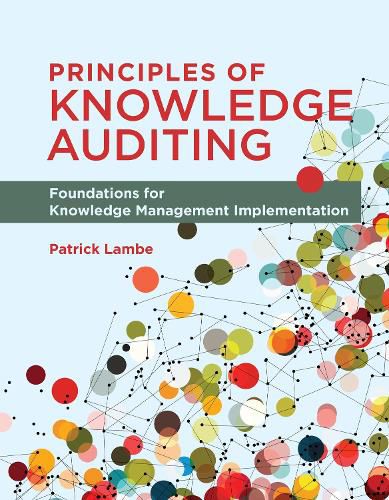
A comprehensive theoretical and practical guide to the operating principles of knowledge auditing, illustrated with numerous case studies.
A knowledge audit provides an at a glance view of an organization’s needs and opportunities. Its purpose is to improve an organization’s effectiveness through a better understanding of the dynamics and levers of knowledge production, access, and use. However, this developing field is hampered by the lack of a common language about the origins and nature of knowledge auditing. In Principles of Knowledge Auditing, Patrick Lambe integrates the theory and practices of the field, laying out principles and guidelines for a clearer and more pragmatic approach to knowledge auditing that makes it more accessible to practitioners and researchers.
Lambe examines knowledge auditing in the context of the development of communications, information, and knowledge management in the twentieth century. He critiques and clarifies ambiguities in how knowledge audits are approached and described, as well as how the results are conveyed within organizations. He discusses the benefits and risks of knowledge management standards. Knowledge auditors, he says, need a common frame of reference more than they need standards. Standards have their uses, but they provide only markers and sign posts and are poor representations of the richness of the landscape. He concludes with a set of guiding principles for practitioners.
$9.00 standard shipping within Australia
FREE standard shipping within Australia for orders over $100.00
Express & International shipping calculated at checkout
Stock availability can be subject to change without notice. We recommend calling the shop or contacting our online team to check availability of low stock items. Please see our Shopping Online page for more details.
A comprehensive theoretical and practical guide to the operating principles of knowledge auditing, illustrated with numerous case studies.
A knowledge audit provides an at a glance view of an organization’s needs and opportunities. Its purpose is to improve an organization’s effectiveness through a better understanding of the dynamics and levers of knowledge production, access, and use. However, this developing field is hampered by the lack of a common language about the origins and nature of knowledge auditing. In Principles of Knowledge Auditing, Patrick Lambe integrates the theory and practices of the field, laying out principles and guidelines for a clearer and more pragmatic approach to knowledge auditing that makes it more accessible to practitioners and researchers.
Lambe examines knowledge auditing in the context of the development of communications, information, and knowledge management in the twentieth century. He critiques and clarifies ambiguities in how knowledge audits are approached and described, as well as how the results are conveyed within organizations. He discusses the benefits and risks of knowledge management standards. Knowledge auditors, he says, need a common frame of reference more than they need standards. Standards have their uses, but they provide only markers and sign posts and are poor representations of the richness of the landscape. He concludes with a set of guiding principles for practitioners.
Search our extensive online catalogue.
