Readings Newsletter
Become a Readings Member to make your shopping experience even easier.
Sign in or sign up for free!
You’re not far away from qualifying for FREE standard shipping within Australia
You’ve qualified for FREE standard shipping within Australia
The cart is loading…


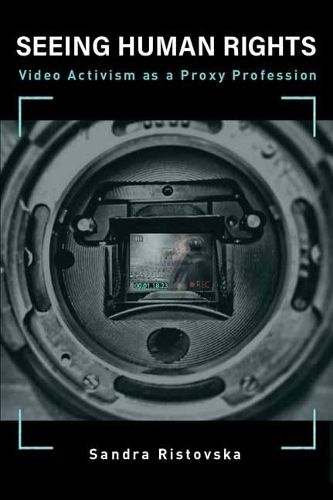
As video becomes an important tool to expose injustice, an examination of how human rights organizations are seeking to professionalize video activism.
Visual imagery is at the heart of humanitarian and human rights activism, and video has become a key tool in these efforts. The Saffron Revolution in Myanmar, the Green Movement in Iran, and Black Lives Matter in the United States have all used video to expose injustice. In Seeing Human Rights, Sandra Ristovska examines how human rights organizations are seeking to professionalize video activism through video production, verification standards, and training. The result, she argues, is a proxy profession that uses human rights videos to tap into journalism, the law, and political advocacy.
Ristovska explains that this proxy profession retains some tactical flexibility in its use of video while giving up on the more radical potential and imaginative scope of video activism as a cultural practice. Drawing on detailed analysis of legal cases and videos as well as extensive interviews with staff members of such organizations as Amnesty International, Human Rights Watch, WITNESS, the International Criminal Tribunal for the former Yugoslavia (ICTY), and the International Criminal Court (ICC), Ristovska considers the unique affordances of video and examines the unfolding relationships among journalists, human rights organizations, activists, and citizens in global crisis reporting. She offers a case study of the visual turn in the law; describes advocacy and marketing strategies; and argues that the transformation of video activism into a proxy profession privileges institutional and legal spaces over broader constituencies for public good.
$9.00 standard shipping within Australia
FREE standard shipping within Australia for orders over $100.00
Express & International shipping calculated at checkout
Stock availability can be subject to change without notice. We recommend calling the shop or contacting our online team to check availability of low stock items. Please see our Shopping Online page for more details.
As video becomes an important tool to expose injustice, an examination of how human rights organizations are seeking to professionalize video activism.
Visual imagery is at the heart of humanitarian and human rights activism, and video has become a key tool in these efforts. The Saffron Revolution in Myanmar, the Green Movement in Iran, and Black Lives Matter in the United States have all used video to expose injustice. In Seeing Human Rights, Sandra Ristovska examines how human rights organizations are seeking to professionalize video activism through video production, verification standards, and training. The result, she argues, is a proxy profession that uses human rights videos to tap into journalism, the law, and political advocacy.
Ristovska explains that this proxy profession retains some tactical flexibility in its use of video while giving up on the more radical potential and imaginative scope of video activism as a cultural practice. Drawing on detailed analysis of legal cases and videos as well as extensive interviews with staff members of such organizations as Amnesty International, Human Rights Watch, WITNESS, the International Criminal Tribunal for the former Yugoslavia (ICTY), and the International Criminal Court (ICC), Ristovska considers the unique affordances of video and examines the unfolding relationships among journalists, human rights organizations, activists, and citizens in global crisis reporting. She offers a case study of the visual turn in the law; describes advocacy and marketing strategies; and argues that the transformation of video activism into a proxy profession privileges institutional and legal spaces over broader constituencies for public good.
Search our extensive online catalogue.
