Readings Newsletter
Become a Readings Member to make your shopping experience even easier.
Sign in or sign up for free!
You’re not far away from qualifying for FREE standard shipping within Australia
You’ve qualified for FREE standard shipping within Australia
The cart is loading…


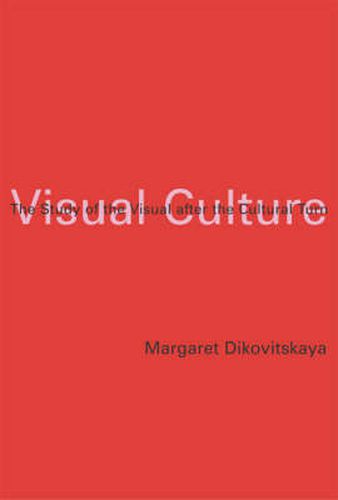
This is the history, theoretical frameworks, methodology, and pedagogy of the new field of visual culture. This work deals with current debates and the possibility for future consensus. In recent years, visual culture has emerged as a growing and important interdisciplinary field of study. Visual culture regards images as central to the representation of meaning in the world. It encompasses high art without assuming its higher status. But despite the current proliferation of studies and programs in visual culture, there seems to be no consensus within the field itself as to its scope and objectives, definitions, and methods. In Visual Culture , Margaret Dikovitskaya offers an overview of this new area of study in order to reconcile its diverse theoretical positions and understand its potential for further research. Her aim is to show how visual culture can avoid what she defines as the Scylla and Charybdis that threaten it: the lack of a specific object of study (given its departure from the traditional hierarchies of art history) and the expansion of the field to the point of incoherence as it seems to subsume everything related to the cultural and the visual. Dikovitskaya gives us an archaeology of visual culture, examining the cultural turn away from art history and the emergence of visual studies. She discusses first the field’s history, theoretical frameworks, and methods, and then examines four programs and courses in visual culture - those at the University of Rochester, the University of Chicago, the University of California, Irvine, and the State University of New York at Stony Brook. Bringing together considerations of theory and practice, Dikovitskaya charts the future of visual culture programs in the twenty-first century.
$9.00 standard shipping within Australia
FREE standard shipping within Australia for orders over $100.00
Express & International shipping calculated at checkout
Stock availability can be subject to change without notice. We recommend calling the shop or contacting our online team to check availability of low stock items. Please see our Shopping Online page for more details.
This is the history, theoretical frameworks, methodology, and pedagogy of the new field of visual culture. This work deals with current debates and the possibility for future consensus. In recent years, visual culture has emerged as a growing and important interdisciplinary field of study. Visual culture regards images as central to the representation of meaning in the world. It encompasses high art without assuming its higher status. But despite the current proliferation of studies and programs in visual culture, there seems to be no consensus within the field itself as to its scope and objectives, definitions, and methods. In Visual Culture , Margaret Dikovitskaya offers an overview of this new area of study in order to reconcile its diverse theoretical positions and understand its potential for further research. Her aim is to show how visual culture can avoid what she defines as the Scylla and Charybdis that threaten it: the lack of a specific object of study (given its departure from the traditional hierarchies of art history) and the expansion of the field to the point of incoherence as it seems to subsume everything related to the cultural and the visual. Dikovitskaya gives us an archaeology of visual culture, examining the cultural turn away from art history and the emergence of visual studies. She discusses first the field’s history, theoretical frameworks, and methods, and then examines four programs and courses in visual culture - those at the University of Rochester, the University of Chicago, the University of California, Irvine, and the State University of New York at Stony Brook. Bringing together considerations of theory and practice, Dikovitskaya charts the future of visual culture programs in the twenty-first century.
Search our extensive online catalogue.
