Readings Newsletter
Become a Readings Member to make your shopping experience even easier.
Sign in or sign up for free!
You’re not far away from qualifying for FREE standard shipping within Australia
You’ve qualified for FREE standard shipping within Australia
The cart is loading…


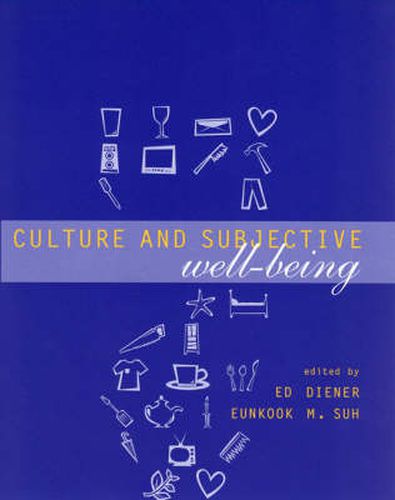
The question of what constitutes the good life has been pondered for millennia. Yet only in the last decades has the study of well-being become a scientific endeavor. This book is based on the idea that we can empirically study quality of life and make cross-society comparisons of subjective well-being (SWB).A potential problem in studying SWB across societies is that of cultural relativism: if societies have different values, the members of those societies will use different criteria in evaluating the success of their society. By examining, however, such aspects of SWB as whether people believe they are living correctly, whether they enjoy their lives, and whether others important to them believe they are living well, SWB can represent the degree to which people in a society are achieving the values they hold dear.The contributors analyze SWB in relation to money, age, gender, democracy, and other factors. Among the interesting findings is that although wealthy nations are on average happier than poor ones, people do not get happier as a wealthy nation grows wealthier.
$9.00 standard shipping within Australia
FREE standard shipping within Australia for orders over $100.00
Express & International shipping calculated at checkout
Stock availability can be subject to change without notice. We recommend calling the shop or contacting our online team to check availability of low stock items. Please see our Shopping Online page for more details.
The question of what constitutes the good life has been pondered for millennia. Yet only in the last decades has the study of well-being become a scientific endeavor. This book is based on the idea that we can empirically study quality of life and make cross-society comparisons of subjective well-being (SWB).A potential problem in studying SWB across societies is that of cultural relativism: if societies have different values, the members of those societies will use different criteria in evaluating the success of their society. By examining, however, such aspects of SWB as whether people believe they are living correctly, whether they enjoy their lives, and whether others important to them believe they are living well, SWB can represent the degree to which people in a society are achieving the values they hold dear.The contributors analyze SWB in relation to money, age, gender, democracy, and other factors. Among the interesting findings is that although wealthy nations are on average happier than poor ones, people do not get happier as a wealthy nation grows wealthier.
Search our extensive online catalogue.
