Readings Newsletter
Become a Readings Member to make your shopping experience even easier.
Sign in or sign up for free!
You’re not far away from qualifying for FREE standard shipping within Australia
You’ve qualified for FREE standard shipping within Australia
The cart is loading…


Key concepts, definitions, examples, and historical contexts for understanding smart cities, along with discussions of both drawbacks and benefits of this approach to urban problems.Over the past ten years, urban planners, technology companies, and governments have promoted smart cities with a somewhat utopian vision of urban life made knowable and manageable through data collection and analysis. Emerging smart cities have become both crucibles and showrooms for the practical application of the Internet of Things, cloud computing, and the integration of big data into everyday life. Are smart cities optimized, sustainable, digitally networked solutions to urban problems? Or are they neoliberal, corporate-controlled, undemocratic non-places? This volume in the MIT Press Essential Knowledge series offers a concise introduction to smart cities, presenting key concepts, definitions, examples, and historical contexts, along with discussions of both the drawbacks and the benefits of this approach to urban life. After reviewing current terminology and justifications employed by technology designers, journalists, and researchers, the book describes three models for smart city development-smart-from-the-start cities, retrofitted cities, and social cities-and offers examples of each. It covers technologies and methods, including sensors, public wi-fi, big data, and smartphone apps, and discusses how developers conceive of interactions among the built environment, technological and urban infrastructures, citizens, and citizen engagement. Throughout, the author-who has studied smart cities around the world-argues that smart city developers should work more closely with local communities, recognizing their preexisting relationship to urban place and realizing the limits of technological fixes. Smartness is a means to an end- improving the quality of urban life.
$9.00 standard shipping within Australia
FREE standard shipping within Australia for orders over $100.00
Express & International shipping calculated at checkout
Stock availability can be subject to change without notice. We recommend calling the shop or contacting our online team to check availability of low stock items. Please see our Shopping Online page for more details.
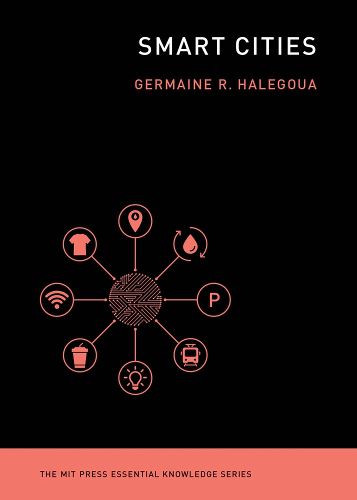
Key concepts, definitions, examples, and historical contexts for understanding smart cities, along with discussions of both drawbacks and benefits of this approach to urban problems.Over the past ten years, urban planners, technology companies, and governments have promoted smart cities with a somewhat utopian vision of urban life made knowable and manageable through data collection and analysis. Emerging smart cities have become both crucibles and showrooms for the practical application of the Internet of Things, cloud computing, and the integration of big data into everyday life. Are smart cities optimized, sustainable, digitally networked solutions to urban problems? Or are they neoliberal, corporate-controlled, undemocratic non-places? This volume in the MIT Press Essential Knowledge series offers a concise introduction to smart cities, presenting key concepts, definitions, examples, and historical contexts, along with discussions of both the drawbacks and the benefits of this approach to urban life. After reviewing current terminology and justifications employed by technology designers, journalists, and researchers, the book describes three models for smart city development-smart-from-the-start cities, retrofitted cities, and social cities-and offers examples of each. It covers technologies and methods, including sensors, public wi-fi, big data, and smartphone apps, and discusses how developers conceive of interactions among the built environment, technological and urban infrastructures, citizens, and citizen engagement. Throughout, the author-who has studied smart cities around the world-argues that smart city developers should work more closely with local communities, recognizing their preexisting relationship to urban place and realizing the limits of technological fixes. Smartness is a means to an end- improving the quality of urban life.
Search our extensive online catalogue.
