Readings Newsletter
Become a Readings Member to make your shopping experience even easier.
Sign in or sign up for free!
You’re not far away from qualifying for FREE standard shipping within Australia
You’ve qualified for FREE standard shipping within Australia
The cart is loading…


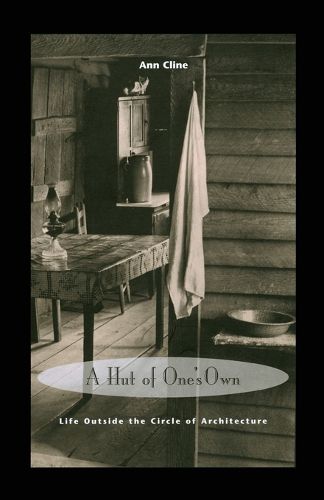
This text on dwellings explores some of the largest questions that can be posed about architecture. What begins where architecture ends? What was before architecture? The ostensible subject of Ann Cline’s inquiry is the primitive hut, a one-room structure built of common or rustic materials. Does the proliferation of these strucutres in recent times represent escapist architectural fantasy, or deeper cultural impulses? As she addresses this question, Cline weaves together two stories: one of primitive huts in times of cultural transition, and the other of diminutive structures in our own time of architectural transition. From these narrative strands emerges a deeper inquiry: what are the limits of architecture? What ghosts inhabit its edges? What does it mean to dwell outside it? Cline’s project began in the early 1970s, when she set out to translate the Japanese tea ritual into an American idiom. First researching the traditional tea practices of Japan, then building and designing huts in the United States, she attempted to make the translation from one culture to another through the use of common American building materials and technology. But her investigation eventually led her to look at many nonarchitectural ideas and sources, for the hut exists both at the beginning of and at the farthest edge of architecture, in the margins between what architecture is and what is is not. In the resulting narrative, she blends autobiography, historical research, and cultural criticism to consider the place that such structures as shacks, teahouses, follies, casitas and diners - simple, undesigned places valued for their timelessness and authenticity - occupy from both a historical and contemporary perspective. This book is an attempt to rethink architecture by studying is boundary conditions and formative structures.
$9.00 standard shipping within Australia
FREE standard shipping within Australia for orders over $100.00
Express & International shipping calculated at checkout
Stock availability can be subject to change without notice. We recommend calling the shop or contacting our online team to check availability of low stock items. Please see our Shopping Online page for more details.
This text on dwellings explores some of the largest questions that can be posed about architecture. What begins where architecture ends? What was before architecture? The ostensible subject of Ann Cline’s inquiry is the primitive hut, a one-room structure built of common or rustic materials. Does the proliferation of these strucutres in recent times represent escapist architectural fantasy, or deeper cultural impulses? As she addresses this question, Cline weaves together two stories: one of primitive huts in times of cultural transition, and the other of diminutive structures in our own time of architectural transition. From these narrative strands emerges a deeper inquiry: what are the limits of architecture? What ghosts inhabit its edges? What does it mean to dwell outside it? Cline’s project began in the early 1970s, when she set out to translate the Japanese tea ritual into an American idiom. First researching the traditional tea practices of Japan, then building and designing huts in the United States, she attempted to make the translation from one culture to another through the use of common American building materials and technology. But her investigation eventually led her to look at many nonarchitectural ideas and sources, for the hut exists both at the beginning of and at the farthest edge of architecture, in the margins between what architecture is and what is is not. In the resulting narrative, she blends autobiography, historical research, and cultural criticism to consider the place that such structures as shacks, teahouses, follies, casitas and diners - simple, undesigned places valued for their timelessness and authenticity - occupy from both a historical and contemporary perspective. This book is an attempt to rethink architecture by studying is boundary conditions and formative structures.
Search our extensive online catalogue.
