Readings Newsletter
Become a Readings Member to make your shopping experience even easier.
Sign in or sign up for free!
You’re not far away from qualifying for FREE standard shipping within Australia
You’ve qualified for FREE standard shipping within Australia
The cart is loading…


How the success and popularity of recycling has diverted attention from the steep environmental costs of manufacturing the goods we consume and discard.Recycling is widely celebrated as an environmental success story. The accomplishments of the recycling movement can be seen in municipal practice, a thriving private recycling industry, and widespread public support and participation. In the United States, more people recycle than vote. But, as Samantha MacBride points out in this book, the goals of recycling-saving the earth (and trees), conserving resources, and greening the economy-are still far from being realized. The vast majority of solid wastes are still burned or buried. MacBride argues that, since the emergence of the recycling movement in 1970, manufacturers of products that end up in waste have successfully prevented the implementation of more onerous, yet far more effective, forms of sustainable waste policy. Recycling as we know it today generates the illusion of progress while allowing industry to maintain the status quo and place responsibility on consumers and local government. MacBride offers a series of case studies in recycling that pose provocative questions about whether the current ways we deal with waste are really the best ways to bring about real sustainability and environmental justice. She does not aim to debunk or discourage recycling but to help us think beyond recycling as it is today.
$9.00 standard shipping within Australia
FREE standard shipping within Australia for orders over $100.00
Express & International shipping calculated at checkout
Stock availability can be subject to change without notice. We recommend calling the shop or contacting our online team to check availability of low stock items. Please see our Shopping Online page for more details.
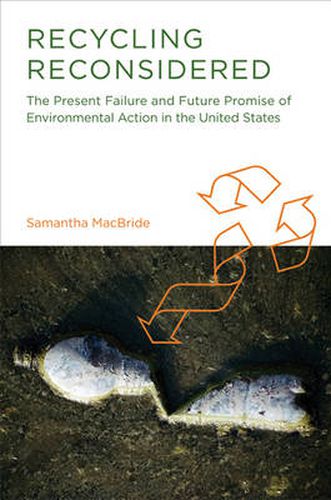
How the success and popularity of recycling has diverted attention from the steep environmental costs of manufacturing the goods we consume and discard.Recycling is widely celebrated as an environmental success story. The accomplishments of the recycling movement can be seen in municipal practice, a thriving private recycling industry, and widespread public support and participation. In the United States, more people recycle than vote. But, as Samantha MacBride points out in this book, the goals of recycling-saving the earth (and trees), conserving resources, and greening the economy-are still far from being realized. The vast majority of solid wastes are still burned or buried. MacBride argues that, since the emergence of the recycling movement in 1970, manufacturers of products that end up in waste have successfully prevented the implementation of more onerous, yet far more effective, forms of sustainable waste policy. Recycling as we know it today generates the illusion of progress while allowing industry to maintain the status quo and place responsibility on consumers and local government. MacBride offers a series of case studies in recycling that pose provocative questions about whether the current ways we deal with waste are really the best ways to bring about real sustainability and environmental justice. She does not aim to debunk or discourage recycling but to help us think beyond recycling as it is today.
Search our extensive online catalogue.
