Readings Newsletter
Become a Readings Member to make your shopping experience even easier.
Sign in or sign up for free!
You’re not far away from qualifying for FREE standard shipping within Australia
You’ve qualified for FREE standard shipping within Australia
The cart is loading…


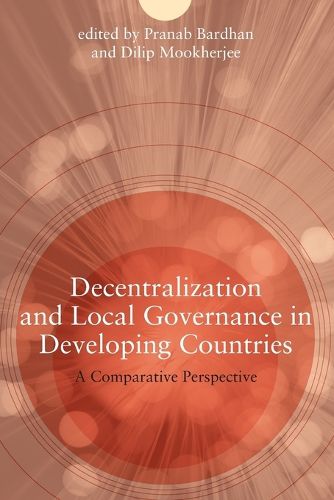
This book provides comparative and interdisciplinary perspectives on the current trend in the developing world of devolving political and economic power to local governments. Over the past three decades the developing world has seen increasing devolution of political and economic power to local governments. Decentralisation is considered an important element of participatory democracy and, along with privatisation and deregulation, represents a substantial reduction in the authority of national governments over economic policy. The contributors to Decentralization and Local Governance in Developing Countries examine this institutional transformation from comparative and interdisciplinary perspectives, offering detailed case studies of decentralisation in eight countries: Bolivia, Brazil, China, India, Indonesia, Pakistan, South Africa, and Uganda. Some of these countries witnessed an unprecedented big bang shift toward comprehensive political and economic decentralisation: Bolivia in 1995 and Indonesia after the fall of Suharto in 1998. Brazil and India decentralised in an uneven and more gradual manner. In some other countries (such as Pakistan) devolution represented an instrument for consolidation of power of a nondemocratic national government. In China local governments were granted much economic but little political power. South Africa made the transition from the undemocratic decentralisation of apartheid to decentralisation under a democratic constitution. The studies provide a comparative perspective on the political and economic context within which decentralisation took place, how this shaped its design and possible impact.
$9.00 standard shipping within Australia
FREE standard shipping within Australia for orders over $100.00
Express & International shipping calculated at checkout
Stock availability can be subject to change without notice. We recommend calling the shop or contacting our online team to check availability of low stock items. Please see our Shopping Online page for more details.
This book provides comparative and interdisciplinary perspectives on the current trend in the developing world of devolving political and economic power to local governments. Over the past three decades the developing world has seen increasing devolution of political and economic power to local governments. Decentralisation is considered an important element of participatory democracy and, along with privatisation and deregulation, represents a substantial reduction in the authority of national governments over economic policy. The contributors to Decentralization and Local Governance in Developing Countries examine this institutional transformation from comparative and interdisciplinary perspectives, offering detailed case studies of decentralisation in eight countries: Bolivia, Brazil, China, India, Indonesia, Pakistan, South Africa, and Uganda. Some of these countries witnessed an unprecedented big bang shift toward comprehensive political and economic decentralisation: Bolivia in 1995 and Indonesia after the fall of Suharto in 1998. Brazil and India decentralised in an uneven and more gradual manner. In some other countries (such as Pakistan) devolution represented an instrument for consolidation of power of a nondemocratic national government. In China local governments were granted much economic but little political power. South Africa made the transition from the undemocratic decentralisation of apartheid to decentralisation under a democratic constitution. The studies provide a comparative perspective on the political and economic context within which decentralisation took place, how this shaped its design and possible impact.
Search our extensive online catalogue.
