Readings Newsletter
Become a Readings Member to make your shopping experience even easier.
Sign in or sign up for free!
You’re not far away from qualifying for FREE standard shipping within Australia
You’ve qualified for FREE standard shipping within Australia
The cart is loading…


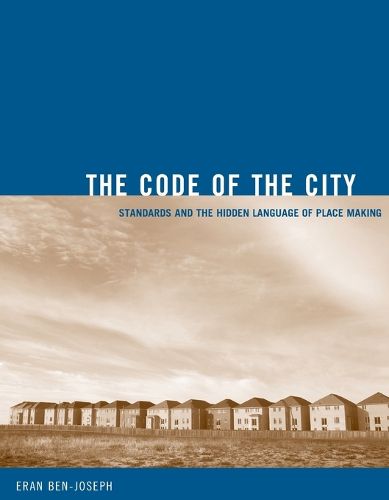
Traces the evolution of urban development codes and standards, examines their effect on city planning and design, and proposes alternatives that will encourage innovation. Standards and codes dictate virtually all aspects of urban development. The same standards for subdividing land, grading, laying streets and utilities, and configuring rights-of-way and street widths to accommodate cars (rather than pedestrians) have been adopted in many areas of the world regardless of variations in local environments. In The Code of the City, Eran Ben-Joseph examines the relationship between standards and place making. He traces the evolution of codes and standards and analyses their impact on the modern city and its suburbs, arguing that it is time for development regulations to reflect site-specific and localised physical design. Standards and codes were meant to bring order and safety to the city building process. But now, Ben-Joseph argues, these accumulated rules and their widespread application illustrate a disconnect between the original rationale for their existence and their actual effect on the natural and human environment. To discover how this separation of codes from local conditions came about, he looks at the origins of urban standards and their use, from early civilisation through the rapid urbanisation of the nineteenth century. He provides examples that demonstrate how standards have shaped residential developments and reshaped the natural landscape. And he considers alternatives for the future - innovation and de facto deregulation by private developers, new design technologies, and place-based regulations reflecting local conditions. Standards, writes Ben-Joseph, will continue to shape the built environment, but they must be flexible enough to allow for innovation and contribute to the development of sustainable and desirable communities.
$9.00 standard shipping within Australia
FREE standard shipping within Australia for orders over $100.00
Express & International shipping calculated at checkout
Stock availability can be subject to change without notice. We recommend calling the shop or contacting our online team to check availability of low stock items. Please see our Shopping Online page for more details.
Traces the evolution of urban development codes and standards, examines their effect on city planning and design, and proposes alternatives that will encourage innovation. Standards and codes dictate virtually all aspects of urban development. The same standards for subdividing land, grading, laying streets and utilities, and configuring rights-of-way and street widths to accommodate cars (rather than pedestrians) have been adopted in many areas of the world regardless of variations in local environments. In The Code of the City, Eran Ben-Joseph examines the relationship between standards and place making. He traces the evolution of codes and standards and analyses their impact on the modern city and its suburbs, arguing that it is time for development regulations to reflect site-specific and localised physical design. Standards and codes were meant to bring order and safety to the city building process. But now, Ben-Joseph argues, these accumulated rules and their widespread application illustrate a disconnect between the original rationale for their existence and their actual effect on the natural and human environment. To discover how this separation of codes from local conditions came about, he looks at the origins of urban standards and their use, from early civilisation through the rapid urbanisation of the nineteenth century. He provides examples that demonstrate how standards have shaped residential developments and reshaped the natural landscape. And he considers alternatives for the future - innovation and de facto deregulation by private developers, new design technologies, and place-based regulations reflecting local conditions. Standards, writes Ben-Joseph, will continue to shape the built environment, but they must be flexible enough to allow for innovation and contribute to the development of sustainable and desirable communities.
Search our extensive online catalogue.
