Readings Newsletter
Become a Readings Member to make your shopping experience even easier.
Sign in or sign up for free!
You’re not far away from qualifying for FREE standard shipping within Australia
You’ve qualified for FREE standard shipping within Australia
The cart is loading…


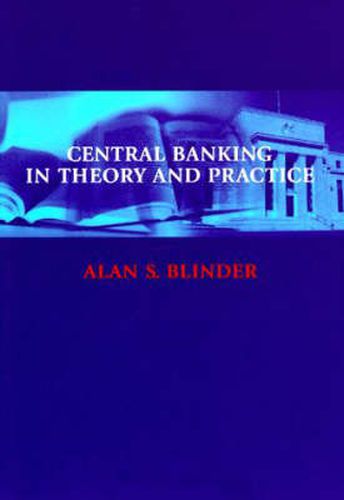
Alan S. Blinder offers the dual perspective of a leading academic macroeconomist who served a stint as Vice-Chairman of the Federal Reserve Board–one who practiced what he had long preached and then returned to academia to write about it. He tells central bankers how they might better incorporate academic knowledge and thinking into the conduct of monetary policy, and he tells scholars how they might reorient their research to be more attuned to reality and thus more useful to central bankers.Based on the 1996 Lionel Robbins Lectures, this readable book deals succinctly, in a nontechnical manner, with a wide variety of issues in monetary policy. The book also includes the author’s suggested solution to an age-old problem in monetary theory: what it means for monetary policy to be neutral.
$9.00 standard shipping within Australia
FREE standard shipping within Australia for orders over $100.00
Express & International shipping calculated at checkout
Stock availability can be subject to change without notice. We recommend calling the shop or contacting our online team to check availability of low stock items. Please see our Shopping Online page for more details.
Alan S. Blinder offers the dual perspective of a leading academic macroeconomist who served a stint as Vice-Chairman of the Federal Reserve Board–one who practiced what he had long preached and then returned to academia to write about it. He tells central bankers how they might better incorporate academic knowledge and thinking into the conduct of monetary policy, and he tells scholars how they might reorient their research to be more attuned to reality and thus more useful to central bankers.Based on the 1996 Lionel Robbins Lectures, this readable book deals succinctly, in a nontechnical manner, with a wide variety of issues in monetary policy. The book also includes the author’s suggested solution to an age-old problem in monetary theory: what it means for monetary policy to be neutral.
Search our extensive online catalogue.
