Readings Newsletter
Become a Readings Member to make your shopping experience even easier.
Sign in or sign up for free!
You’re not far away from qualifying for FREE standard shipping within Australia
You’ve qualified for FREE standard shipping within Australia
The cart is loading…


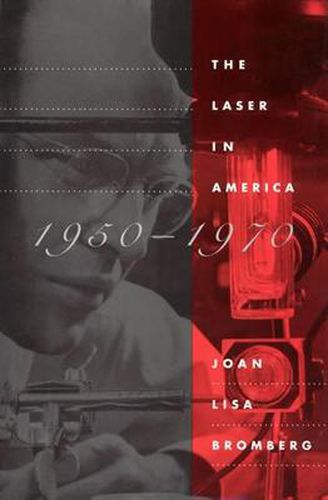
In this book Joan Lisa Bromberg brings a historian’s broad perspective to bear on the formative years of laser research in the United States.
The laser has proved one of the most protean devices of our century. A mere thirty years after its invention, it already serves us in uses as varied as surgical instruments, smart bombs, printers, audio devices, telephone communication, cloth cutting, machining, and chemical research. In this book Joan Lisa Bromberg brings a historian’s broad perspective to bear on the formative years of laser research in the United States. She demonstrates that, as lasers have become a means to probe the structure and changes of the physical universe, so the history of laser research constitutes a probe with which we can penetrate the structure of American science and engineering.
The laser’s history has been as multifaceted as its applications. To the heterogeneity of the groups that developed it, and the sheer size of the cast, must be added the lengthy and bitter disputes that have been fought over priority and patents. Bromberg does not set out to decide who is right ; instead she concentrates on placing the action in the context of the postwar military, commercial, and academic interests that defined it.Starting with the maser, an innovative device for generating pure radio signals of centimeter wavelength, Bromberg describes the conceptual leap that vaulted four orders of magnitude to the laser with its pure beams of visible light. She shows how the operation of the first successful laser sent the pace of research skyrocketing in a research boom driven by a complex combination of professional rewards and institutional pressures.
The book concludes with an epilogue by three laser scientists-Arthur H. Guenther, Henry Kressel, and William Krupke-that brings the technical history up to the present.
$9.00 standard shipping within Australia
FREE standard shipping within Australia for orders over $100.00
Express & International shipping calculated at checkout
Stock availability can be subject to change without notice. We recommend calling the shop or contacting our online team to check availability of low stock items. Please see our Shopping Online page for more details.
In this book Joan Lisa Bromberg brings a historian’s broad perspective to bear on the formative years of laser research in the United States.
The laser has proved one of the most protean devices of our century. A mere thirty years after its invention, it already serves us in uses as varied as surgical instruments, smart bombs, printers, audio devices, telephone communication, cloth cutting, machining, and chemical research. In this book Joan Lisa Bromberg brings a historian’s broad perspective to bear on the formative years of laser research in the United States. She demonstrates that, as lasers have become a means to probe the structure and changes of the physical universe, so the history of laser research constitutes a probe with which we can penetrate the structure of American science and engineering.
The laser’s history has been as multifaceted as its applications. To the heterogeneity of the groups that developed it, and the sheer size of the cast, must be added the lengthy and bitter disputes that have been fought over priority and patents. Bromberg does not set out to decide who is right ; instead she concentrates on placing the action in the context of the postwar military, commercial, and academic interests that defined it.Starting with the maser, an innovative device for generating pure radio signals of centimeter wavelength, Bromberg describes the conceptual leap that vaulted four orders of magnitude to the laser with its pure beams of visible light. She shows how the operation of the first successful laser sent the pace of research skyrocketing in a research boom driven by a complex combination of professional rewards and institutional pressures.
The book concludes with an epilogue by three laser scientists-Arthur H. Guenther, Henry Kressel, and William Krupke-that brings the technical history up to the present.
Search our extensive online catalogue.
