Readings Newsletter
Become a Readings Member to make your shopping experience even easier.
Sign in or sign up for free!
You’re not far away from qualifying for FREE standard shipping within Australia
You’ve qualified for FREE standard shipping within Australia
The cart is loading…


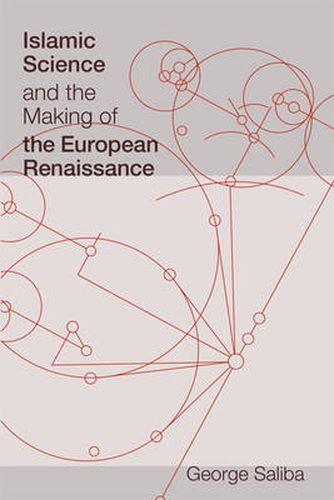
The Islamic scientific tradition has been described many times in accounts of Islamic civilization and general histories of science, with most authors tracing its beginnings to the appropriation of ideas from other ancient civilizations–the Greeks in particular. In this thought-provoking and original book, George Saliba argues that, contrary to the generally accepted view, the foundations of Islamic scientific thought were laid well before Greek sources were formally translated into Arabic in the ninth century. Drawing on an account by the tenth-century intellectual historian Ibn al-Nadīm that is ignored by most modern scholars, Saliba suggests that early translations from mainly Persian and Greek sources outlining elementary scientific ideas for the use of government departments were the impetus for the development of the Islamic scientific tradition. He argues further that there was an organic relationship between the Islamic scientific thought that developed in later centuries and the science that came into being in Europe during the Renaissance. Saliba outlines the conventional accounts of Islamic science, then discusses their shortcomings and proposes an alternate narrative. Using astronomy as a template for understanding the progress of science in Islamic civilization, Saliba demonstrates the originality of Islamic scientific thought. He details the innovations (including new mathematical tools) made by the Islamic astronomers from the thirteenth to sixteenth centuries, and offers evidence that Copernicus could have known of and drawn on their work. Rather than viewing the rise and fall of Islamic science from the often-narrated perspectives of politics and religion, Saliba focuses on the scientific production itself and the complex social, economic, and intellectual conditions that made it possible.
$9.00 standard shipping within Australia
FREE standard shipping within Australia for orders over $100.00
Express & International shipping calculated at checkout
Stock availability can be subject to change without notice. We recommend calling the shop or contacting our online team to check availability of low stock items. Please see our Shopping Online page for more details.
The Islamic scientific tradition has been described many times in accounts of Islamic civilization and general histories of science, with most authors tracing its beginnings to the appropriation of ideas from other ancient civilizations–the Greeks in particular. In this thought-provoking and original book, George Saliba argues that, contrary to the generally accepted view, the foundations of Islamic scientific thought were laid well before Greek sources were formally translated into Arabic in the ninth century. Drawing on an account by the tenth-century intellectual historian Ibn al-Nadīm that is ignored by most modern scholars, Saliba suggests that early translations from mainly Persian and Greek sources outlining elementary scientific ideas for the use of government departments were the impetus for the development of the Islamic scientific tradition. He argues further that there was an organic relationship between the Islamic scientific thought that developed in later centuries and the science that came into being in Europe during the Renaissance. Saliba outlines the conventional accounts of Islamic science, then discusses their shortcomings and proposes an alternate narrative. Using astronomy as a template for understanding the progress of science in Islamic civilization, Saliba demonstrates the originality of Islamic scientific thought. He details the innovations (including new mathematical tools) made by the Islamic astronomers from the thirteenth to sixteenth centuries, and offers evidence that Copernicus could have known of and drawn on their work. Rather than viewing the rise and fall of Islamic science from the often-narrated perspectives of politics and religion, Saliba focuses on the scientific production itself and the complex social, economic, and intellectual conditions that made it possible.
Search our extensive online catalogue.
