Readings Newsletter
Become a Readings Member to make your shopping experience even easier.
Sign in or sign up for free!
You’re not far away from qualifying for FREE standard shipping within Australia
You’ve qualified for FREE standard shipping within Australia
The cart is loading…


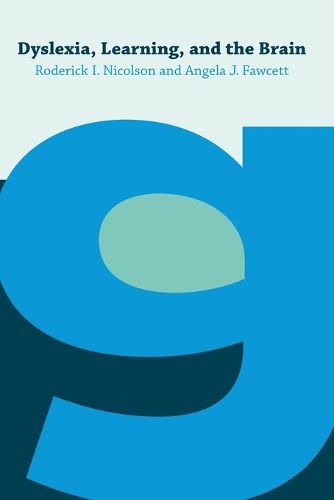
A unique overview of research on dyslexia and an account of the underlying causes at cognitive, brain, and neural system levels that provides a framework for significant progress in the understanding of dyslexia and other related learning disabilities.
Dyslexia research has made dramatic progress since the mid-1980s. Once discounted as a middle-class myth, dyslexia is now the subject of a complex-and confusing-body of theoretical and empirical research. In Dyslexia, Learning, and the Brain, leading dyslexia researchers Roderick Nicolson and Angela Fawcett provide a uniquely broad and coherent analysis of dyslexia theory. Unlike most dyslexia research, which addresses the question what is the cause of the reading disability called dyslexia? the authors’ work has addressed the deeper question of what is the cause of the learning disability that manifests as reading problems? This perspective allows them to place dyslexia research within the much broader disciplines of cognitive psychology and cognitive neuroscience and has led to a rich framework, including two established leading theories, the automatization deficit account (1990) and the cerebellar deficit hypothesis (2001).
Nicolson and Fawcett show that extensive evidence has accumulated to support these two theories and that they may be seen as subsuming the established phonological deficit account and sensory processing accounts. Moving to the explanatory level of neural systems, they argue that all these disorders reflect problems in some component of the procedural learning system, a multiregion system including major components of cortical and subcortical regions. The authors’ answer to the fundamental question what is dyslexia? offers a challenge and motivation for research throughout the learning disabilities, laying the foundations for future progress.
$9.00 standard shipping within Australia
FREE standard shipping within Australia for orders over $100.00
Express & International shipping calculated at checkout
Stock availability can be subject to change without notice. We recommend calling the shop or contacting our online team to check availability of low stock items. Please see our Shopping Online page for more details.
A unique overview of research on dyslexia and an account of the underlying causes at cognitive, brain, and neural system levels that provides a framework for significant progress in the understanding of dyslexia and other related learning disabilities.
Dyslexia research has made dramatic progress since the mid-1980s. Once discounted as a middle-class myth, dyslexia is now the subject of a complex-and confusing-body of theoretical and empirical research. In Dyslexia, Learning, and the Brain, leading dyslexia researchers Roderick Nicolson and Angela Fawcett provide a uniquely broad and coherent analysis of dyslexia theory. Unlike most dyslexia research, which addresses the question what is the cause of the reading disability called dyslexia? the authors’ work has addressed the deeper question of what is the cause of the learning disability that manifests as reading problems? This perspective allows them to place dyslexia research within the much broader disciplines of cognitive psychology and cognitive neuroscience and has led to a rich framework, including two established leading theories, the automatization deficit account (1990) and the cerebellar deficit hypothesis (2001).
Nicolson and Fawcett show that extensive evidence has accumulated to support these two theories and that they may be seen as subsuming the established phonological deficit account and sensory processing accounts. Moving to the explanatory level of neural systems, they argue that all these disorders reflect problems in some component of the procedural learning system, a multiregion system including major components of cortical and subcortical regions. The authors’ answer to the fundamental question what is dyslexia? offers a challenge and motivation for research throughout the learning disabilities, laying the foundations for future progress.
Search our extensive online catalogue.