Readings Newsletter
Become a Readings Member to make your shopping experience even easier.
Sign in or sign up for free!
You’re not far away from qualifying for FREE standard shipping within Australia
You’ve qualified for FREE standard shipping within Australia
The cart is loading…


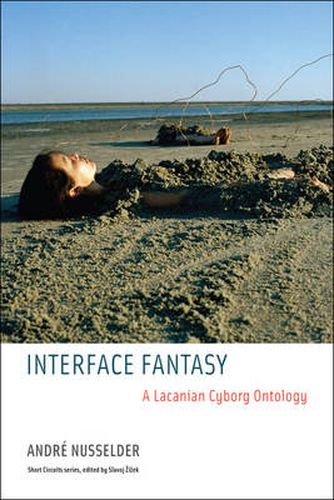
Cyberspace is first and foremost a mental space. Therefore we need to take a psychological approach to understand our experiences in it. In Interface Fantasy, Andre Nusselder uses the core psychoanalytic notion of fantasy to examine our relationship to computers and digital technology. Lacanian psychoanalysis considers fantasy to be an indispensable screen for our interaction with the outside world; Nusselder argues that, at the mental level, computer screens and other human-computer interfaces incorporate this function of fantasy: they mediate the real and the virtual. Interface Fantasy illuminates our attachment to new media: why we love our devices; why we are fascinated by the images on their screens; and how it is possible that virtual images can provide physical pleasure. Nusselder puts such phenomena as avatars, role playing, cybersex, computer psychotherapy, and Internet addiction in the context of established psychoanalytic theory. The virtual identities we assume in virtual worlds, exemplified best by avatars consisting of both realistic and symbolic self-representations, illustrate the three orders that Lacan uses to analyze human reality: the imaginary, the symbolic, and the real. Nusselder analyzes our most intimate involvement with information technology–the almost invisible, affective aspects of technology that have the greatest impact on our lives. Interface Fantasy lays the foundation for a new way of thinking that acknowledges the pivotal role of the screen in the current world of information. And it gives an intelligible overview of basic Lacanian principles (including fantasy, language, the virtual, the real, embodiment, and enjoyment) that shows their enormous relevance for understanding the current state of media technology. Short Circuits series
$9.00 standard shipping within Australia
FREE standard shipping within Australia for orders over $100.00
Express & International shipping calculated at checkout
Stock availability can be subject to change without notice. We recommend calling the shop or contacting our online team to check availability of low stock items. Please see our Shopping Online page for more details.
Cyberspace is first and foremost a mental space. Therefore we need to take a psychological approach to understand our experiences in it. In Interface Fantasy, Andre Nusselder uses the core psychoanalytic notion of fantasy to examine our relationship to computers and digital technology. Lacanian psychoanalysis considers fantasy to be an indispensable screen for our interaction with the outside world; Nusselder argues that, at the mental level, computer screens and other human-computer interfaces incorporate this function of fantasy: they mediate the real and the virtual. Interface Fantasy illuminates our attachment to new media: why we love our devices; why we are fascinated by the images on their screens; and how it is possible that virtual images can provide physical pleasure. Nusselder puts such phenomena as avatars, role playing, cybersex, computer psychotherapy, and Internet addiction in the context of established psychoanalytic theory. The virtual identities we assume in virtual worlds, exemplified best by avatars consisting of both realistic and symbolic self-representations, illustrate the three orders that Lacan uses to analyze human reality: the imaginary, the symbolic, and the real. Nusselder analyzes our most intimate involvement with information technology–the almost invisible, affective aspects of technology that have the greatest impact on our lives. Interface Fantasy lays the foundation for a new way of thinking that acknowledges the pivotal role of the screen in the current world of information. And it gives an intelligible overview of basic Lacanian principles (including fantasy, language, the virtual, the real, embodiment, and enjoyment) that shows their enormous relevance for understanding the current state of media technology. Short Circuits series
Search our extensive online catalogue.
