Readings Newsletter
Become a Readings Member to make your shopping experience even easier.
Sign in or sign up for free!
You’re not far away from qualifying for FREE standard shipping within Australia
You’ve qualified for FREE standard shipping within Australia
The cart is loading…


This title is printed to order. This book may have been self-published. If so, we cannot guarantee the quality of the content. In the main most books will have gone through the editing process however some may not. We therefore suggest that you be aware of this before ordering this book. If in doubt check either the author or publisher’s details as we are unable to accept any returns unless they are faulty. Please contact us if you have any questions.
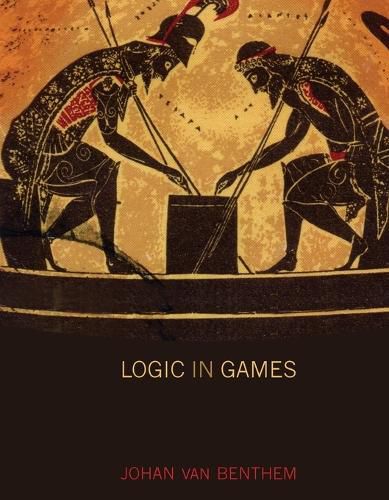
A comprehensive examination of the interfaces of logic, computer science, and game theory, drawing on twenty years of research on logic and games.
This book draws on ideas from philosophical logic, computational logic, multi-agent systems, and game theory to offer a comprehensive account of logic and games viewed in two complementary ways. It examines the logic of games: the development of sophisticated modern dynamic logics that model information flow, communication, and interactive structures in games. It also examines logic as games: the idea that logical activities of reasoning and many related tasks can be viewed in the form of games.
In doing so, the book takes up the "intelligent interaction" of agents engaging in competitive or cooperative activities and examines the patterns of strategic behavior that arise. It develops modern logical systems that can analyze information-driven changes in players' knowledge and beliefs, and introduces the "Theory of Play" that emerges from the combination of logic and game theory. This results in a new view of logic itself as an interactive rational activity based on reasoning, perception, and communication that has particular relevance for games.
Logic in Games, based on a course taught by the author at Stanford University, the University of Amsterdam, and elsewhere, can be used in advanced seminars and as a resource for researchers.
$9.00 standard shipping within Australia
FREE standard shipping within Australia for orders over $100.00
Express & International shipping calculated at checkout
Stock availability can be subject to change without notice. We recommend calling the shop or contacting our online team to check availability of low stock items. Please see our Shopping Online page for more details.
This title is printed to order. This book may have been self-published. If so, we cannot guarantee the quality of the content. In the main most books will have gone through the editing process however some may not. We therefore suggest that you be aware of this before ordering this book. If in doubt check either the author or publisher’s details as we are unable to accept any returns unless they are faulty. Please contact us if you have any questions.
A comprehensive examination of the interfaces of logic, computer science, and game theory, drawing on twenty years of research on logic and games.
This book draws on ideas from philosophical logic, computational logic, multi-agent systems, and game theory to offer a comprehensive account of logic and games viewed in two complementary ways. It examines the logic of games: the development of sophisticated modern dynamic logics that model information flow, communication, and interactive structures in games. It also examines logic as games: the idea that logical activities of reasoning and many related tasks can be viewed in the form of games.
In doing so, the book takes up the "intelligent interaction" of agents engaging in competitive or cooperative activities and examines the patterns of strategic behavior that arise. It develops modern logical systems that can analyze information-driven changes in players' knowledge and beliefs, and introduces the "Theory of Play" that emerges from the combination of logic and game theory. This results in a new view of logic itself as an interactive rational activity based on reasoning, perception, and communication that has particular relevance for games.
Logic in Games, based on a course taught by the author at Stanford University, the University of Amsterdam, and elsewhere, can be used in advanced seminars and as a resource for researchers.
Search our extensive online catalogue.
