Readings Newsletter
Become a Readings Member to make your shopping experience even easier.
Sign in or sign up for free!
You’re not far away from qualifying for FREE standard shipping within Australia
You’ve qualified for FREE standard shipping within Australia
The cart is loading…


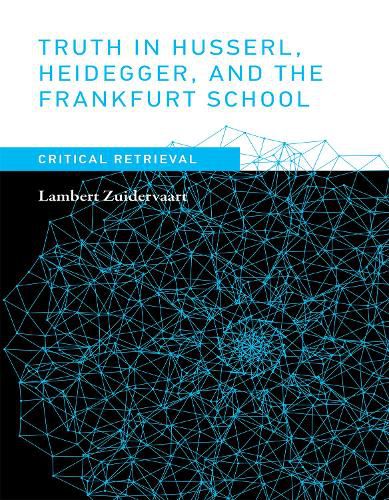
An innovative, ambitious, tradition-crossing study drawing on the work of Husserl, Heidegger, Horkheimer, Adorno, and Habermas to propose a new and transformative concept of truth.The idea of truth is a guiding theme for German continental philosophers from Husserl through Habermas. In this book, Lambert Zuidervaart examines debates surrounding the idea of truth in twentieth-century German continental philosophy. He argues that the Heideggerian and critical theory traditions have much in common-despite the miscommunication, opposition, and even outright hostility that have prevailed between them-including significant roots in the phenomenology of Edmund Husserl. Zuidervaart sees the tensions between Heideggerian thought and critical theory as potentially generative sources for a new approach to the idea of truth. He argues further that the critical retrieval of insights from German continental philosophy can shed light on current debates in analytic truth theory. Zuidervaart structures his account around three issues- the distinction between propositional truth and truth that is more than propositional (which he calls existential truth); the relationship between propositional truth and the discursive justification of propositional truth claims, framed in analytic philosophy by debates between epistemic and nonepistemic conceptions of truth; and the relationship between propositional truth and the objectivity of knowledge, often presented in analytic philosophy as a conflict between realists and antirealists over the relation between truth bearers and truth makers. In an innovative and ambitious argument, drawing on the work of Husserl, Heidegger, Horkheimer, Adorno, and Habermas, Zuidervaart proposes a new and transformative conception of truth.
$9.00 standard shipping within Australia
FREE standard shipping within Australia for orders over $100.00
Express & International shipping calculated at checkout
Stock availability can be subject to change without notice. We recommend calling the shop or contacting our online team to check availability of low stock items. Please see our Shopping Online page for more details.
An innovative, ambitious, tradition-crossing study drawing on the work of Husserl, Heidegger, Horkheimer, Adorno, and Habermas to propose a new and transformative concept of truth.The idea of truth is a guiding theme for German continental philosophers from Husserl through Habermas. In this book, Lambert Zuidervaart examines debates surrounding the idea of truth in twentieth-century German continental philosophy. He argues that the Heideggerian and critical theory traditions have much in common-despite the miscommunication, opposition, and even outright hostility that have prevailed between them-including significant roots in the phenomenology of Edmund Husserl. Zuidervaart sees the tensions between Heideggerian thought and critical theory as potentially generative sources for a new approach to the idea of truth. He argues further that the critical retrieval of insights from German continental philosophy can shed light on current debates in analytic truth theory. Zuidervaart structures his account around three issues- the distinction between propositional truth and truth that is more than propositional (which he calls existential truth); the relationship between propositional truth and the discursive justification of propositional truth claims, framed in analytic philosophy by debates between epistemic and nonepistemic conceptions of truth; and the relationship between propositional truth and the objectivity of knowledge, often presented in analytic philosophy as a conflict between realists and antirealists over the relation between truth bearers and truth makers. In an innovative and ambitious argument, drawing on the work of Husserl, Heidegger, Horkheimer, Adorno, and Habermas, Zuidervaart proposes a new and transformative conception of truth.
Search our extensive online catalogue.
